
Key findings
- The Bank of England’s central outlook points to slower household-consumption growth in 2027 before a modest improvement in 2028. Retailers should plan for selective demand and uneven category performance, not a broad consumer recovery.
- Retail volumes were stronger over the three months to September 2026, but the detail is less reassuring: September volumes fell and the preceding strength was partly associated with weather, fuel, promotions and event effects.
- October footfall data are a warning for location-dependent firms rather than proof of structural decline. Lower visits increase the importance of destination appeal, in-store conversion and repeat custom.
- Online accounted for 28.8% of retail spending in September 2026, but its short-term movement reinforces that channel performance is shaped by category, seasonality and fulfilment economics—not a simple migration from stores to digital.
- Marketing budgets are rising, but cautious consumers and intensifying competition make measurement more important, not less. Retailers should manage contribution after discount, fulfilment, returns and acquisition costs rather than optimise to sales alone.
The thesis: demand may recover, but retail economics will remain hard
The useful question for UK retail between now and April 2028 is not simply whether consumers will spend more. It is whether retailers can turn available demand into profitable, repeatable sales. That distinction matters because a business can grow nominal revenue while losing ground on gross margin, stock clearance, paid acquisition, fulfilment, returns, labour or energy costs.
The Bank of England’s central forecast supports a cautious view. It expects real household incomes to fall in the coming quarters, household-consumption growth to slow in the first half of 2027 and then improve from the second half of the year. Its annual central projection is for household-consumption growth to slow from 1.2% in 2026 to 0.5% in 2027, before rising to 1.1% in 2028; real post-tax labour income is projected to fall by 0.6% in 2027 (Bank of England, 2026) ↗. These are economy-wide projections rather than a retail-sales forecast, but they establish the likely direction of pressure on discretionary spending.
Sanctuary’s interpretation is therefore a two-speed market. Replenishment-led, essential and well-differentiated purchases are likely to be more resilient than easily delayed, comparable discretionary purchases. Yet resilience should not be confused with easy growth. In a market where customers are comparing harder and deferring more decisions, the commercial advantage will belong to firms with a clear value proposition, disciplined stock and pricing, and a joined-up store-and-digital journey.
This is especially consequential for SMEs and high-street operators. Large retailers may have greater buying power and media scale; smaller firms must compensate through sharper local relevance, service, specialist knowledge, speed and repeat-customer relationships. The objective is not to mimic the convenience model of national competitors at any cost. It is to offer a reason to choose, visit and return that produces a positive contribution after all delivery costs.
The data show resilience, but not a clean consumer recovery
The latest retail figures contain both a reason for measured confidence and a warning against over-reading a single quarter. Great Britain retail sales volumes rose 0.7% in the three months to September 2026 and were 1.5% higher than a year earlier. However, volumes fell 0.4% in September after a 0.7% rise in August. The Office for National Statistics identified fuel, warm-weather food and beverage sales, promotions and the World Cup among the influences on quarterly performance, while September weakness included clothing, supermarket and non-store sales (Office for National Statistics, 2026) ↗.
That composition matters. Weather, events and promotional timing can bring spending forward, shift it between categories or affect the timing of seasonal demand. They do not necessarily signal a durable improvement in households’ ability or willingness to fund discretionary purchases. A retailer that treats the three-month volume increase as a general demand recovery could over-order stock, maintain unproductive promotional intensity or mistake temporary category strength for a lasting shift in customer behaviour.
The inflation outlook strengthens the case for caution. CPI inflation was 3.5% in September 2026, while the Bank expects inflation to rise to around 5% in the second quarter of 2027 as higher energy costs feed through to household bills and supply chains (Office for National Statistics, 2026) ↗; (Bank of England, 2026) ↗. Higher energy costs matter twice: they constrain household budgets and can increase operating and supplier costs. The result is a squeeze on both sides of a retail transaction.
Footfall adds a separate, immediate signal for physical locations. Total UK footfall fell 4.7% year on year in October 2026, with high streets down 5.2%, shopping centres down 4.1% and retail parks down 3.6% (British Retail Consortium and Sensormatic Solutions, 2026) ↗. The BRC specifically identified stormy weather, so one month should not be treated as evidence of irreversible structural decline. But the finding is operationally important: where visits are lower, a store has fewer opportunities to convert passing demand. That raises the value of local destination appeal, appointments, events, collection services, staff deployment and customer capture for later repeat purchase.
Why conversion, rather than traffic alone, is the strategic variable
In a pressured market, more traffic is not automatically good growth. If it is generated by blanket discounting, expensive paid media or poorly targeted offers, a sales increase can conceal a fall in contribution. Equally, declining footfall is not automatically a verdict on a location if the business retains its most valuable customers, improves conversion or increases the frequency and value of repeat visits.
The mechanism is straightforward. Higher household bills and everyday prices make customers more deliberate. They compare more, postpone discretionary purchases and look for an offer that lowers a genuine cost: price, time, effort or perceived risk. The Bank expects the Ofgem price cap to rise from £1,723 in the fourth quarter of 2026 to around £2,150 in the first quarter of 2027, and judges that higher energy prices and tighter financial conditions will weigh on consumption (Bank of England, 2026) ↗. For many retailers, the tempting response will be wider promotions. That can preserve short-term volume, but it can also train customers to wait for a discount, make price restoration harder and obscure whether demand is intrinsically viable.
A better approach is a deliberate value architecture. Businesses should distinguish entry-price products that protect accessibility, core lines that drive repeat custom and premium lines where service, scarcity, quality or expertise support margin. Value need not mean the lowest ticket price. Dependable availability, transparent delivery charges, useful advice, rapid collection, repair, guarantees and carefully designed bundles can all reduce customer friction. The commercial test is whether the offer improves customer value without moving cost or risk elsewhere in the journey.
Channel economics require the same discipline. Online represented 28.8% of retail spending in September 2026, marginally down from 28.9% in August. Online spending values fell 0.1% over the third quarter but were 7.4% above the same quarter a year earlier (Office for National Statistics, 2026) ↗. The evidence does not support a simplistic conclusion that either stores or ecommerce are winning. It suggests that channel performance remains category-specific and volatile. Retailers should therefore evaluate the combined customer journey: online research may lead to a store purchase or collection; a store visit may generate a later online order; returns and delivery costs can change the profitability of each route.
A practical scenario framework to April 2028
<strong>Base case: selective demand and a gradual recovery.</strong> In the Bank’s central outlook, inflation rises into mid-2027, household consumption growth slows and recovery becomes more visible from the second half of 2027. For retail, that implies continued value-seeking, promotional pressure and uneven performance across categories and places before conditions become less restrictive. The commercial winners may not be the businesses reporting the fastest top-line growth, but those improving full-price sell-through, repeat rate and contribution per customer (Bank of England, 2026) ↗.
<strong>Upside case: pressure on households eases faster.</strong> A faster fall in energy-price pressure and a less restrictive financial environment could release some postponed purchases. Retailers that have protected brand salience, service standards and product availability could then capture demand quickly. The trade-off is inventory risk: committing to stock or marketing expenditure before full-price demand improves can convert an upside assumption into later markdowns.
<strong>Downside case: demand weakens before costs can adjust.</strong> More persistent energy pressure, weaker confidence or increased saving by households would intensify switching into value tiers and make discretionary purchases harder to win. The Bank’s weaker-demand scenario has GDP growth at 0.3% in 2027, against 1.3% in its central projection, and unemployment at 5.3% in the fourth quarter of 2027, compared with 5.0% centrally (Bank of England, 2026) ↗. This is not a forecast that the downside will occur; it is a useful stress test. Businesses should know in advance which purchase orders, staffing patterns, media commitments and markdown triggers would change if the downside signals emerge.
The point of scenarios is not false precision or assigning spurious probabilities. It is management readiness. A retailer with pre-agreed responses can protect cash and customer relationships sooner than one that waits for deteriorating margins to confirm that its annual budget is no longer plausible.
Marketing is an investment in demand—but only if it is governed as one
Marketing conditions are more constructive than the household outlook, although that should not be mistaken for cheaper acquisition. In the third quarter of 2026, 25.6% of UK firms reported higher total marketing budgets and 11.3% reported cuts, a net balance of +14.3%. Direct marketing and market research each recorded a net balance of +5.2%, while S&P Global Market Intelligence forecast UK advertising-spend growth of 1.3% for 2027 (IPA and S&P Global Market Intelligence, 2026) ↗.
The plausible interpretation is not that every campaign will pay back more easily. Higher budgets may mean more firms are competing for attention from cautious customers. Retailers should avoid the false choice between brand activity and performance media. Performance channels can capture expressed demand, but local visibility, product confidence, customer experience and trusted recommendations influence whether a customer has a reason to search, visit or choose a less familiar business in the first place.
Sanctuary recommends a conversion ledger that makes trade-offs visible across campaigns, offers and locations. It should track sales, but also gross margin after discount, fulfilment and return costs; first-to-second-purchase conversion; customer capture; repeat revenue; and, where feasible, incremental rather than merely attributed sales. Controlled tests by geography, audience, time period or offer can improve judgement where perfect experimentation is impractical.
This is particularly valuable for independents and town-centre businesses. Shared events, complementary business bundles, collection points, demonstrations and local loyalty partnerships can increase the value of a trip across a destination. Such activity should be judged on incremental customer value and viable operational capacity, not on footfall headlines alone. Done well, it creates local economic value by linking business-level conversion to a more useful and distinctive place proposition.
What management teams should do now
<strong>Build explicit value ladders.</strong> Define which products and services exist to attract customers, retain them, earn margin or demonstrate differentiation. Remove overlapping offers that confuse customers and hide margin leakage.
<strong>Run stock and cash against scenarios.</strong> Set reorder points, supplier discussions and markdown triggers for the base, upside and downside cases. Excess stock is not resilience if it can only be released through deeper discounting.
<strong>Manage stores as conversion and retention assets.</strong> Track visits, conversion, basket size, appointments, collection, returns, customer capture and repeat purchase by location. Falling footfall should prompt a review of the trip proposition, opening pattern, local partnerships and staff deployment—not an automatic conclusion that the site has failed.
<strong>Put customer trust into commercial operations.</strong> Assign ownership for reference prices, savings claims, delivery charges, subscriptions, reviews and availability messages. In a cautious market, unclear or inconsistent claims can destroy value at the point of comparison.
<strong>Protect a learning budget within marketing.</strong> Retain modest, disciplined testing across proposition, creative, audience and channel. The priority is to learn which demand is profitable to serve under pressure, rather than maximise exposure or last-click conversions.
The evidence does not justify either fatalism or a generic recovery plan. UK retail demand has proved more resilient than a simple pessimistic narrative would suggest, but its drivers remain unstable and household pressure is expected to intensify in 2027. The sound response is tighter management capability: clearer offers, better inventory decisions, credible local relevance and measurement that follows value through to contribution rather than stopping at the till.
Research foundation
References
- Office for National Statistics (2026). Retail sales, Great Britain: September 2026. Office for National Statistics.Source ↗
- Office for National Statistics (2026). Consumer price inflation, UK: September 2026. Office for National Statistics.Source ↗
- Bank of England Monetary Policy Committee (2026). Monetary Policy Report: November 2026. Bank of England.Source ↗
- British Retail Consortium and Sensormatic Solutions (2026). Stormy weather washes away footfall. British Retail Consortium.Source ↗
- Institute of Practitioners in Advertising and S&P Global Market Intelligence (2026). UK companies revise marketing budgets up to highest level in over two years, reveals Q3 2026 IPA Bellwether Report. Institute of Practitioners in Advertising.Source ↗
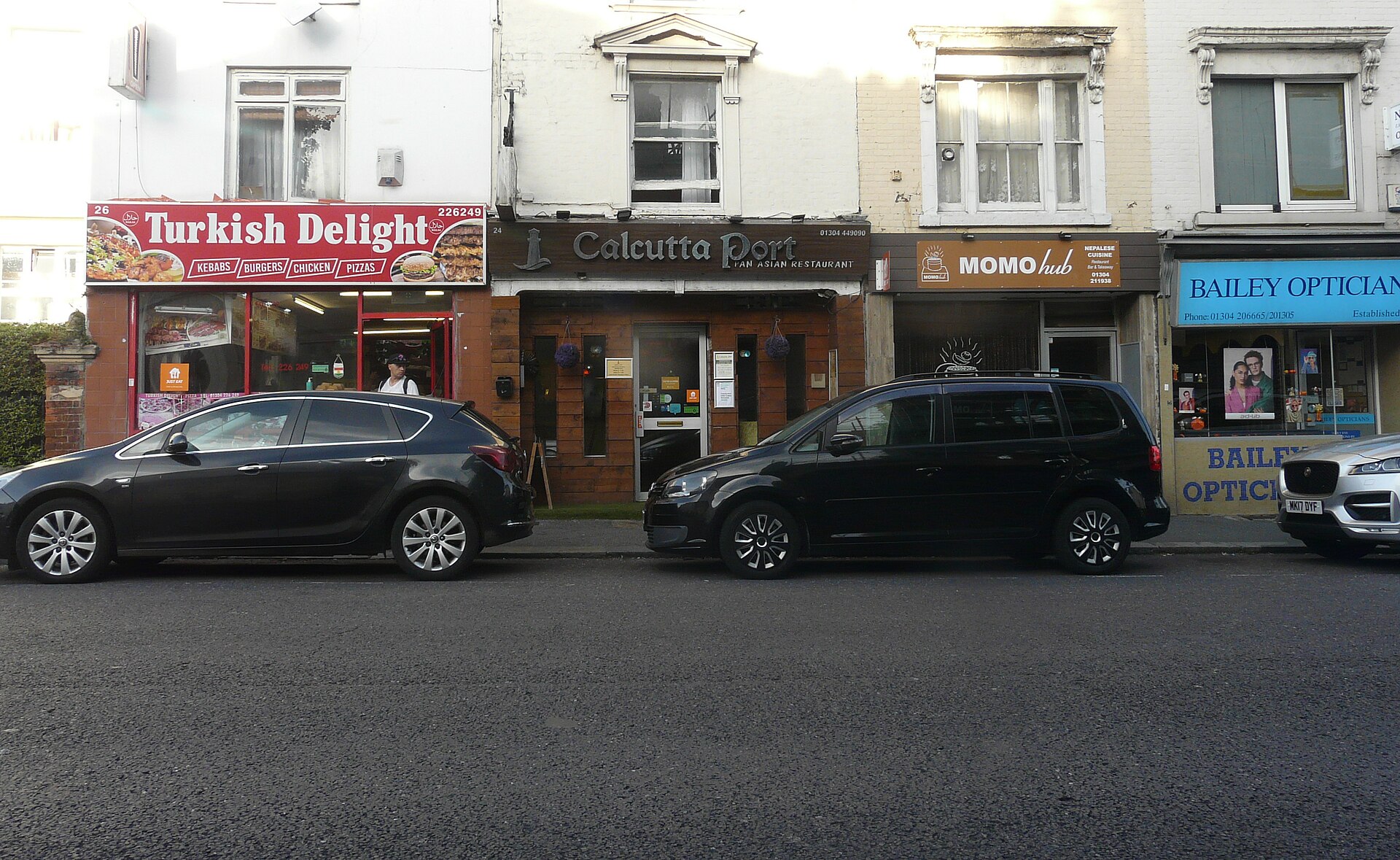
- John Baker. Hero image: Retail outlets, High Street - geograph.org.uk - 7644448.jpg. Wikimedia Commons · CC BY-SA 2.0.Image source ↗
Related Sanctuary capabilities
From analysis to implementation.
Discussion
No approved comments yet.