
Key findings
- Data-centre connection applications have grown far faster than measured operational electricity use, making queue position an unreliable proxy for either demand or deliverability.
- Proposed commitment fees and milestones would make a credible delivery programme—not a connection application alone—a central commercial asset.
- Queue reform can release capacity, but it cannot remove the physical constraints of network works, equipment supply, planning and construction logistics.
- The strongest local economic opportunity lies in delivery capability: electrical engineering, civils, logistics, controls, maintenance, skills and project assurance around viable schemes.
- The forecast is conditional: the data-centre-specific commitment regime was still proposed, rather than settled policy, in the source period.
The thesis: grid access is becoming a test of execution
**Forecast horizon: November 2026 to November 2028.** The UK data-centre power debate is often reduced to a competition for scarce grid capacity. That was already an incomplete description of the market; demand-connection reform makes it less adequate still. Over the next two years, the commercial advantage is likely to shift from holding a place in the queue towards demonstrating that a project can be financed, permitted, built, energised and operated without creating avoidable stress for the electricity system.
This matters because the connection queue is now both an investment signal and a source of distortion. Ofgem reports that demand-connection applications rose from 41 GW in November 2024 to 125 GW by June 2025, with data-centre projects accounting for at least 80 GW of the increase. In response, it proposed a data-centre commitment fee, payable when an offer is accepted, and project-specific milestones. The proposed refundable fee range was £237,500 to £712,500 per MW, with forfeiture possible when projects exit the queue early (Ofgem, 2026) ↗.
The mechanism is straightforward. A meaningful financial and evidential test raises the carrying cost of optionality. It should make it less attractive to reserve capacity before land, finance, planning, procurement and an operating model are sufficiently advanced. It should also improve the quality of information available to network companies deciding which demand signals warrant physical reinforcement.
**Sanctuary interpretation:** a connection offer should be treated as a conditional input into an investment case, not as the investment case itself. The likely winners will be organisations able to turn a stated power requirement into an auditable energisation programme. For places seeking data-centre investment, that shifts the proposition from claiming “available power” to helping credible projects overcome real delivery dependencies.
The evidence supports growth—but not simple conclusions from the queue
Measured operational demand and requested capacity are different quantities, and the distinction is essential. DESNZ estimates that data centres serving external organisations in Great Britain consumed 4.5 TWh of electricity in 2024—around 2% of grid electricity consumption. That consumption rose by 1.3 TWh, or 41%, between 2020 and 2024. The estimate is meaningful evidence of rapid growth, but its methodology excludes enterprise data centres, so it is not a complete count of all data-processing electricity use (DESNZ, 2026) ↗.
It would nevertheless be analytically wrong to divide 4.5 TWh by the 80 GW-plus application figure and call the result an oversupply ratio. The former is annual energy delivered to operating facilities; the latter is requested connection capacity for projects that may be phased, may require resilience headroom, and may never proceed. Load factors, redundancy design, construction sequencing and project attrition all matter. Neither figure, on its own, says how much grid capacity is economically justified.
Their divergence does, however, explain the policy concern. A queue populated by applications with uncertain maturity can delay viable projects and encourage network plans based on weak signals. Ofgem’s demand-connections reform is organised around **Curate**, **Plan** and **Connect**: screening or deterring non-viable demand, aligning strategic demand with system planning, and accelerating practical connection routes. Its work also considers self-build and transfer models for high-voltage assets and operational arrangements that may allow more large-demand capacity while maintaining system security (Ofgem, 2026) ↗.
There is a legitimate counterargument. A large commitment fee or rigid milestone regime could disproportionately favour well-capitalised incumbents and deter innovative developers before planning risk is resolved. That risk does not invalidate reform; it makes calibration important. Milestones should distinguish between avoidable speculation and genuine projects facing external delays, while transition arrangements need to avoid penalising schemes that entered the queue under earlier rules. As of the source period, the data-centre-specific fee and milestones remained proposals, not final policy (Ofgem, 2026) ↗.
Why curation moves the bottleneck to physical delivery
Removing weak applications does not build a primary substation, secure a transformer, obtain route consents or commission a high-voltage connection. Those tasks are likely to become the binding constraints once queue discipline improves. The Clean Power 2030 Action Plan identifies long equipment lead times, constrained manufacturing capacity, exposure to international supply chains, and logistics pressures involving ports, vessels and abnormal loads. It also states that Great Britain will need around twice as much new transmission-network infrastructure by 2030 as was built in the preceding decade (DESNZ, 2024) ↗.
This is why the value chain matters more than the headline campus announcement. A project with a viable connection date may still fail to energise if it has not secured equipment, design approvals, cable routes, civils capacity, construction sequencing and commissioning resources. Equally, a speculative application leaving the queue is not necessarily an economic loss: it can free capacity and planning attention for a data centre, industrial electrification project, charging hub, housing development or other scheme with a stronger delivery case.
Operating cost is a further discipline. DESNZ’s industrial and non-domestic electricity price series underlines that electricity remains a continuing operating exposure, rather than a development-stage issue that ends at energisation (DESNZ, 2026) ↗. For high-load users, a bankable model must therefore address not just connection availability but the interaction of energy procurement, network charges, resilience, efficiency investment and any flexibility obligations.
**Sanctuary recommendation:** every major-load project should maintain an energisation critical path with named owners, dates and contingencies for the connection agreement, land rights, planning, substation design, equipment orders, cable route, civils, commissioning, backup-resilience design and flexibility arrangements. A single target energisation date conceals too much risk; an owned dependency plan makes risk governable.
Three plausible outcomes by November 2028
**Base case: curated growth, uneven delivery.** Ofgem implements some form of commitment and milestone regime, and weaker applications are withdrawn, delayed or deprioritised. Viable data-centre and industrial projects gain a clearer route through the queue, but local connection dates remain constrained by reinforcement works, equipment availability, planning and construction capacity. Flexible operation gains value where it can credibly improve the connection proposition. This is the most credible scenario because it follows the direction of reform without assuming that administrative change removes physical bottlenecks.
**Upside case: strategic coordination creates investable clusters.** Strategic-demand policy, connection reform and spatial planning align in selected locations. Government’s consultation on accelerating connections for strategic demand identifies AI Growth Zones, EV charging hubs and manufacturing electrification among potential beneficiaries of prioritisation (DESNZ, 2026) ↗. Where power, fibre, land, skills, transport and local consent are coordinated, developers can justify shared investment in substations, storage, flexible demand and supply-chain capacity. The economic prize is not only new load; it is a more durable local ecosystem of engineering, maintenance, construction and technical employment.
**Downside case: paper demand clears, but physical dates barely improve.** A commitment regime removes some speculative demand, yet projects still encounter slow planning, transformer and cable constraints, workforce shortages, or uncertainty over future charges. The queue becomes more disciplined but does not translate quickly into construction starts or energisation. This outcome is credible because government acknowledges supply-chain and logistics constraints, while Ofgem’s framework for the 2028–33 distribution price control emphasises a phased “build and flex” approach under uncertainty rather than unlimited anticipatory investment (DESNZ, 2024; Ofgem, 2026) ↗ ↗.
The practical implication is that neither a queue place nor a policy announcement should be valued as if it were an operational asset. Evidence of physical progress deserves a higher weighting in investment, site-selection and local-growth decisions.
What to monitor: proof of progress, not announcement volume
The first indicator is the final form of demand-connection policy: the fee level, required evidence, milestone tests and transition rules for existing applicants. A light-touch regime would preserve more optionality; a stringent but well-designed regime would accelerate the premium on delivery readiness.
The second is connection outcomes. Withdrawals, milestone compliance, revised connection dates, issued offers and energisations are more informative than gross application totals. Ofgem reported that wider reform had accelerated around 7.8 GW of projects by an average of six years; the key test is whether comparable progress becomes visible for large demand (Ofgem, 2026) ↗.
Third, investors and local partners should scrutinise network investment evidence. Distribution network operators are due to submit 2028–33 plans in December 2026, with Ofgem expecting final ED3 decisions by the end of 2027 and the new period beginning on 1 April 2028. These plans will show whether regional reinforcement is being prepared against evidenced demand rather than broad speculation (Ofgem, 2026) ↗.
Finally, spatial planning can improve visibility but should not be mistaken for a project approval process. NESO submitted six Strategic Spatial Energy Plan pathway options in August 2026; government selection of a preferred pathway will sharpen signals about where major energy infrastructure may be needed, while the SSEP itself will not select individual projects (NESO, 2026) ↗. In the meantime, transformer orders, cable-framework awards, substation works, route agreements and abnormal-load planning are stronger indicators of delivery than campus announcements.
Implications for places, developers and smaller firms
For local authorities and growth partnerships, the strategic question is not simply whether to attract data centres. It is whether the place can help an investable scheme navigate land assembly, consenting, fibre, transport, workforce, water, resilience and grid interfaces without displacing other valuable economic uses. A credible local offer should clarify trade-offs between high-load development, industrial electrification, housing and public infrastructure, rather than treating every large connection request as unqualified growth.
For developers and operators, flexibility should be designed into the scheme early. Not all data-centre load can be interrupted, and resilience requirements are substantial. But cooling optimisation, thermal storage, batteries, staged energisation, non-time-critical computing and transparent operational-control arrangements may distinguish genuinely manageable demand from nominal flexibility. The discipline is to separate firm critical load from load that can actually respond under agreed conditions.
For SMEs, the more durable opportunity is likely to be in the enabling economy: electrical design, specialist civils, cable and plant logistics, controls, security, maintenance, skills provision and project assurance. Firms should be cautious about treating every capacity announcement as a sales lead. The stronger target is a project with funded milestones, identifiable procurement routes and visible physical works. That approach supports management capability and local productivity because it rewards suppliers that can plan, certify and deliver against demanding infrastructure programmes.
**Sanctuary judgement:** by late 2028, the most valuable position in UK data-centre power is unlikely to be the largest nominal claim on the grid. It will be the most credible combination of demand, flexibility, finance and construction readiness. Reform can improve the signal; delivery capability will determine whether that signal becomes local economic value.
Research foundation
References
- Ofgem (2026). Ofgem acts to free up grid capacity by tackling speculative data centre projects. Ofgem.Source ↗
- Ofgem (2026). Connect update: demand connections reform. Ofgem.Source ↗
- Department for Energy Security and Net Zero (2026). Energy Trends: June 2026, special feature article – Data centre electricity consumption in Great Britain, 2020 to 2024. GOV.UK.Source ↗
- Department for Energy Security and Net Zero (2024). Clean Power 2030 Action Plan: A new era of clean electricity – main report. GOV.UK.Source ↗
- Department for Energy Security and Net Zero (2026). Industrial energy price statistics. GOV.UK.Source ↗
- Department for Energy Security and Net Zero (2026). Accelerating electricity network connections for strategic demand. GOV.UK.Source ↗
- Ofgem (2026). Ofgem sets rules for 2028 to 2033 grid investment to meet growing electricity demand. Ofgem.Source ↗
- National Energy System Operator (2026). Strategic Spatial Energy Planning (SSEP). NESO.Source ↗
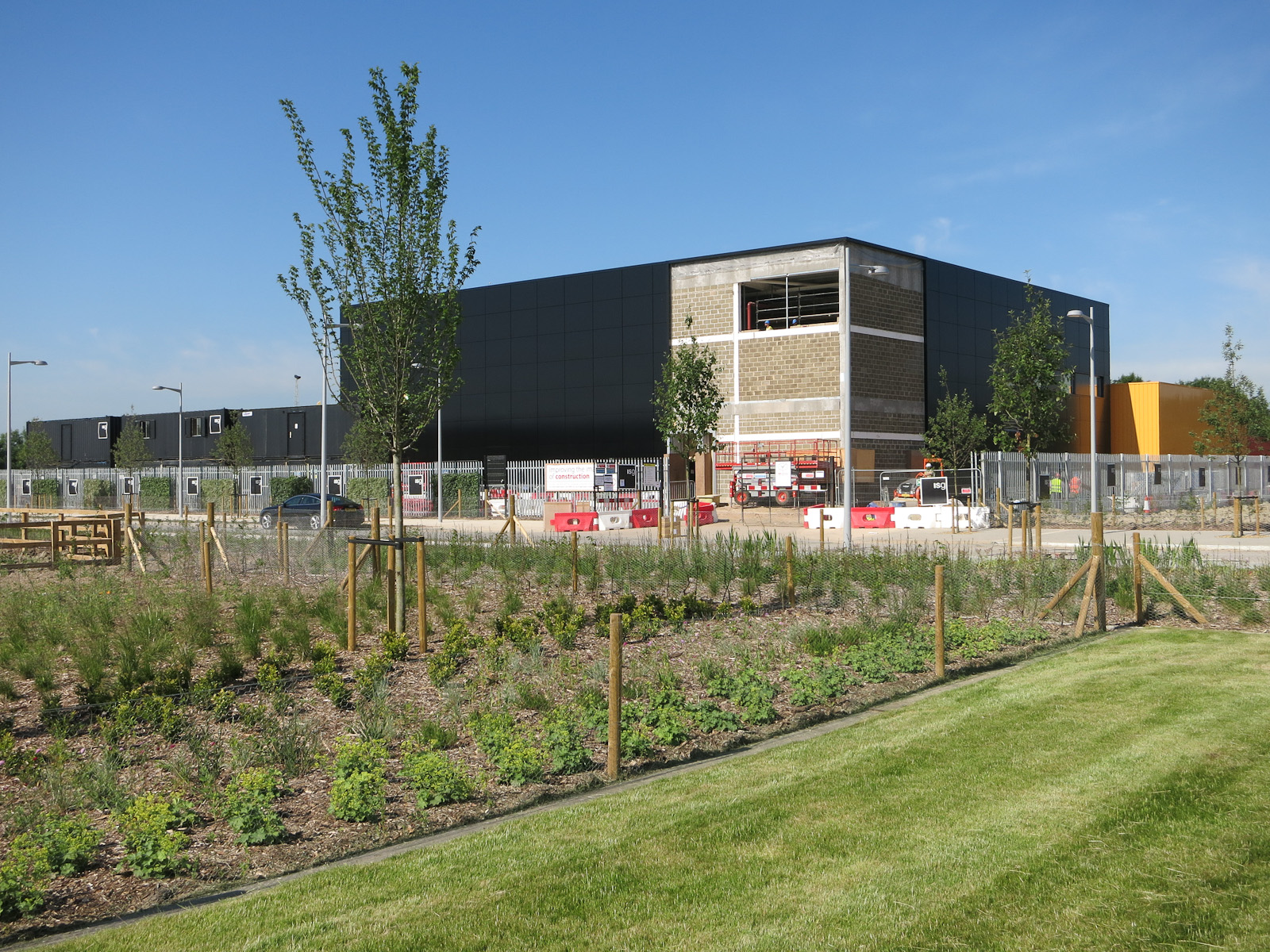
- Hugh Venables. Hero image: Data Centre under construction - geograph.org.uk - 4040245.jpg. Wikimedia Commons · CC BY-SA 2.0.Image source ↗
Related Sanctuary capabilities
From analysis to implementation.
Discussion
No approved comments yet.