
Key findings
- Data-centre connection applications should not be read as a forecast of operational electricity demand. Ofgem says contracted demand offers rose from 41 GW to 125 GW between November 2024 and June 2025, with data-centre proposals accounting for at least 80 GW of the increase. [[ofgem2026a]]
- The practical value of a connection position is likely to depend increasingly on evidence that a project has a real customer, finance, technical capability, equipment-procurement progress and a credible delivery timetable.
- Flexibility is not a substitute for grid reinforcement. It can nevertheless improve a project’s case where it reduces uncertainty over energisation, peak demand or network operation—and where the promised flexibility is technically and commercially credible.
- AI Growth Zone electricity-cost support could improve the economics of selected northern and Scottish locations from April 2027, subject to legislation and final scheme design. It cannot compensate for an undeliverable connection, weak site infrastructure or absent customer demand.
- Local economic value will not follow automatically from a large electrical load. Places need to test procurement, skills, supplier-development and infrastructure plans alongside the power case.
The thesis: grid access is being recast as a test of deliverability
The UK’s data-centre debate is often framed as a race for power: which site has the largest connection offer, the earliest date or the strongest place in the queue. That framing is now incomplete. Between 2027 and 2029, the more valuable proposition is likely to be a large-load project that can demonstrate not only a need for electricity, but also a credible route to construction and an acceptable fit with a constrained energy system.
The distinction matters because application volumes are not operational demand. Operational data centres in Great Britain used an estimated 4.5 TWh of grid electricity in 2024, equivalent to 2% of total grid consumption; their consumption was 1.3 TWh higher than in 2020. The Office for National Statistics notes that this estimate excludes some enterprise facilities, so it is not a complete measure of the sector. Still, it describes a meaningful but comparatively modest operational base. (Office for National Statistics, 2026) ↗
Connection offers tell a very different story. Ofgem reports that contracted demand offers increased from 41 GW to 125 GW between November 2024 and June 2025, with data-centre projects contributing at least 80 GW of that rise. Its concern is not demand growth itself, but the risk that speculative or non-viable projects distort network planning, delay viable schemes and ultimately impose avoidable costs on consumers. (Ofgem, 2026a) ↗
**Sanctuary analysis.** A queue position will remain commercially important, especially where it is backed by a physical delivery plan. But it is becoming less credible as a standalone asset. When networks and regulators are deciding which requests to retain, plan around and connect, a project’s evidence of demand, finance, construction readiness and operational profile becomes part of the infrastructure case. The likely result is a more selective pipeline, not an end to data-centre development.
This is why the question for local authorities, landowners and developers should shift from “how many megawatts are attached to this site?” to “what makes this load deliverable, and what does the place gain if it is delivered?”
Why 2027 is a commercial inflection point
Three overlapping developments make 2027 more than a conventional forecast date.
First, demand-connection reform is moving from diagnosis towards implementation. Ofgem’s July 2026 consultation proposed commitment fees and milestones for data-centre projects. Among the proposed requirements are evidence of a credible end user, procurement progress for long-lead electrical equipment, and financial and technical capability. The consultation closed in September 2026 and a final decision was still pending at the time of the consultation material; these proposals are therefore a strong policy signal, not settled rules. (Ofgem, 2026b) ↗
Second, the wider connections reform timetable is already resetting project sequencing. NESO scheduled Gate 2 Phase 2 distribution offers from mid-October 2026 to mid-March 2027, while transmission and large embedded Phase 2 offers were scheduled from early September 2026 to mid-January 2027. Delivery dates can differ between projects because engineering complexity and reassessment volumes vary. (National Energy System Operator, 2026a) ↗
Third, government has proposed geographically targeted support through AI Growth Zones. Eligible data centres could receive electricity-cost reductions from April 2027, subject to legislation and final scheme design. Government cited support of up to £24/MWh in Scotland, £16/MWh in Cumbria and £14/MWh in the North East for a 500 MW facility, with the policy intended to encourage projects nearer to available generation and lower constraint costs. (Department for Science, Innovation and Technology, 2025) ↗
The interaction matters. Reform can remove weak projects from the pipeline; revised offers can clarify the physical and financial realities of connection; and location-specific support can improve the investment case for schemes that already have credible fundamentals. None of these mechanisms independently creates a viable campus. A tariff reduction cannot resolve delayed network works, equipment shortages, planning risk, poor fibre resilience or an uncontracted customer base. Conversely, a well-prepared project may find that the combination materially changes its location options.
For places seeking investment, the immediate task is not simply to promote land. It is to assemble the evidence that allows a serious developer, network company and prospective customer to judge whether the site can progress together.
The mechanism: credible demand becomes infrastructure evidence
The underlying change is institutional as well as commercial. A very large demand application influences the apparent case for network reinforcement. If it is speculative, the system may be asked to plan around load that will never materialise. If it is well evidenced but poorly timed or highly inflexible, it may still create costly delivery and operating challenges.
Ofgem’s demand-connections programme describes three linked tasks: **Curate**, to reduce speculative and non-viable applications; **Plan**, to support strategic prioritisation; and **Connect**, to accelerate delivery while preserving system security. (Ofgem, 2026c) ↗ The implication is clear: commercial maturity is no longer separate from network maturity.
NESO’s transitional Regional Energy Strategic Plan adds a place dimension. It is intended to consider strategic demand, including major industrial development, freeports and data centres, across energy vectors. It identifies strategic need, while network companies remain responsible for deciding whether investment is required and how it should be developed. (National Energy System Operator, 2026b) ↗ Inclusion in a regional strategic discussion is therefore neither a connection offer nor a guarantee of local economic benefit.
**What a credible project should be able to show**
1. **Demand proof:** an identified customer or robustly evidenced route to one, realistic energisation dates and a phased load profile.
2. **Delivery proof:** a clear understanding of connection dependencies, reinforcement assumptions, costs, responsibilities and the procurement status of long-lead equipment.
3. **Operational proof:** a specific account of what flexibility is possible, when it can be used, for how long, and at what commercial cost.
4. **Place proof:** evidence that the site can support construction, digital connectivity, workforce access and a coherent planning strategy.
5. **Local-value proof:** practical commitments on supply-chain access, skills and other benefits that can be monitored rather than generic multiplier claims.
Flexibility requires particular discipline. It should not be presented as a blanket promise that every AI workload can be interrupted at will. A stronger proposition distinguishes between staged energisation, workload scheduling, on-site storage and any contractual curtailment arrangement. Each has different technical limits and different value to the system. Flexibility is useful where it reduces a defined constraint or uncertainty; it is not a substitute for the wires, substations and generation needed to serve sustained demand.
Three scenarios for 2027–29—and the trade-offs behind them
These scenarios are not forecasts of exact megawatts or probabilities. The available evidence shows a large gap between applications and operating load, but does not establish a reliable conversion rate from one to the other. Their purpose is to test decisions against plausible outcomes.
**Base case: disciplined regional expansion.** Connection reform weakens or removes part of the speculative pipeline, while Gate 2 outcomes give viable schemes greater clarity on cost, date and location. Growth continues, but it concentrates around projects with customer commitments, finance, equipment procurement and credible network routes. The main bottleneck shifts from queue access to execution: substations, transformers, civil works, planning, skilled labour and resilient fibre infrastructure.
**Upside case: flexible-load campuses support wider investment.** The strongest projects go beyond compliance, offering phased energisation and credible arrangements for managed load, storage or scheduling where their operations allow it. Regional partners align land, planning, skills and supplier programmes with network planning. This is plausible, but should not be assumed: NESO identifies data-centre flexibility and high-temperature thermal storage as emerging sources of industrial and commercial demand flexibility, while also observing that industrial and commercial flexibility has recently been limited. (National Energy System Operator, 2025) ↗
**Downside case: queue clean-up reveals a delivery gap.** Some applications fail credibility tests, yet viable projects still face slow construction, long equipment lead times, planning friction or operating costs that undermine investment decisions. Energy-cost exposure remains material: the ONS reported that the UK electricity system price in July 2026 was 34% higher than in July 2025. (Office for National Statistics, 2026b) ↗ In this outcome, public announcements and land promotion advance faster than energised capacity.
The key trade-off is between speed and confidence. A place may wish to reserve land and pursue strategic options early. It should avoid presenting tentative grid access as bankable capacity before the project has crossed clear evidence gates. Equally, an overly rigid insistence on final certainty can cause a region to miss the period when partners, sites and network plans can still be shaped together.
What UK places, businesses and investors should do now
For local and combined authorities, the most useful immediate intervention is a controlled **strategic-load evidence base**. It should separate verified information from developer aspiration and cover land control, planning status, grid geography, anticipated load profile, digital connectivity, transport and construction access, skills provision, local suppliers and community impacts. This is a governance tool before it is an investment-promotion tool.
For industrial estates and logistics operators, the opportunity is wider than hosting a single large facility. A credible cluster may create work in electrical engineering, maintenance, cooling, security, construction logistics, fibre installation and specialist recruitment. But local benefit depends on procurement design and management capability. It should be evidenced through supplier engagement, training pathways and realistic contract opportunities—not inferred from the size of the electrical connection.
For SMEs and entrepreneurs, the nearer-term opportunity is likely to lie in solving delivery constraints: electrical compliance, asset monitoring, construction logistics, resilience planning, specialist staffing and energy-data services. Firms should not assume that regional electricity incentives will flow through automatically. They should identify a specific capability that helps a project build, operate or manage risk more effectively.
For developers and investors, staged commitments are the rational response to uncertainty. Retain options where system fit is plausible, but release major capital only against evidence gates: finalised connection terms, customer commitment, equipment procurement, planning progress, a tested flexibility proposition and a local delivery plan. Ofgem is also consulting on options that could enable greater self-build, ownership and transfer of transmission connection assets. This may create additional delivery routes for capable parties, but it is not yet a guaranteed acceleration mechanism. (Ofgem, 2026d) ↗
**Sanctuary judgement.** The UK should not treat large digital loads as strategic merely because they are large. The projects most likely to create durable value will be those that convert power demand into deliverable infrastructure, productive supplier relationships and a credible partnership with the energy system. Over the next three years, that conversion capability—not a nominal place in the queue—will increasingly separate investable projects from speculative ones.
Research foundation
References
- Office for National Statistics (2026). Data centres and the UK National Accounts. Office for National Statistics.Source ↗
- Ofgem (2026). Ofgem acts to free up grid capacity by tackling speculative data centre projects. Ofgem.Source ↗
- Ofgem (2026). Proposed data centre connection reforms. Ofgem.Source ↗
- National Energy System Operator (2026). Connections reform timeline. National Energy System Operator.Source ↗
- Department for Science, Innovation and Technology (2025). Delivering AI Growth Zones. GOV.UK.Source ↗
- Ofgem (2026). Connect update: demand connections reform. Ofgem.Source ↗
- National Energy System Operator (2026). Transitional Regional Energy Strategic Plan explainer. National Energy System Operator.Source ↗
- National Energy System Operator (2025). Future Energy Scenarios 2025: Pathways to Net Zero. National Energy System Operator.Source ↗
- Office for National Statistics (2026). Economic activity and social change in the UK, real-time indicators: 20 August 2026. Office for National Statistics.Source ↗
- Ofgem (2026). Connections. Ofgem.Source ↗
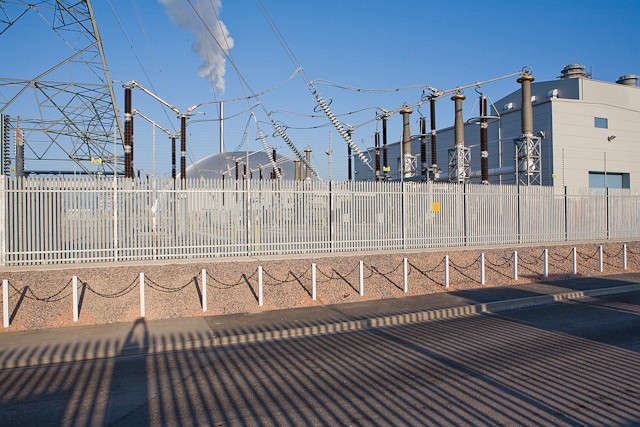
- Peter Facey. Hero image: Marchwood National Grid Substation - geograph.org.uk - 1107752.jpg. Wikimedia Commons · CC BY-SA 2.0.Image source ↗
Related Sanctuary capabilities
From analysis to implementation.
Discussion
No approved comments yet.