
Key findings
- The CMA’s use of direct consumer-enforcement powers, including 14 consumer-protection investigations in 2025–26, makes joined-up control of customer-facing claims a live management priority, not a back-office legal exercise [[cma-annual-report-2026]] [[cma-direct-enforcement-2026]].
- The relevant price is the price a customer can realistically buy at. Where a mandatory charge is omitted from the initial price, later disclosure may not repair the expectation created earlier in the journey [[cma-aa-drip-pricing-2026]] [[cma-price-transparency-2026]].
- Reviews, ratings, rankings and defaults can reinforce one another. They should be governed as connected commercial signals rather than as separate marketing, product and compliance assets [[cma-fake-reviews-guidance-2025]] [[cma-online-choice-architecture-2022]].
- For SMEs, better transparency need not mean more bureaucracy. A disciplined review of price, proof and purchase path can reduce expectation-repair work, complaints and avoidable service cost while improving the quality of demand retained.
The management issue is the offer customers experience
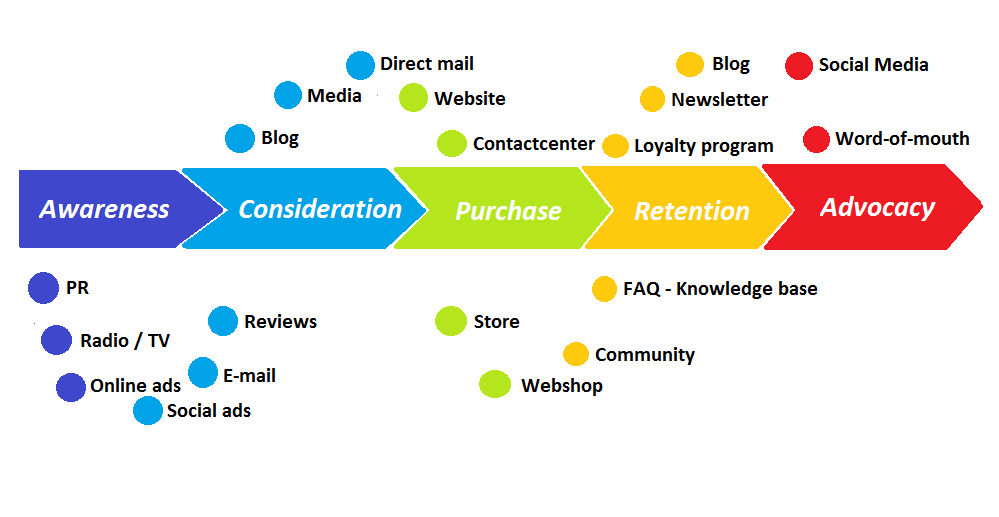
UK consumer-protection risk is often treated as a question of legal copy: whether the terms were available, whether a fee appeared somewhere in checkout, or whether marketing approved a campaign. That framing misses how customers make decisions. Their expectation is formed across search results, social adverts, marketplace listings, comparison sites, ratings, booking tools, checkout pages and confirmation messages. To the customer, these are one offer, even where the business sees separate systems, suppliers and internal owners.
That distinction matters in 2026 because consumer enforcement remains an active CMA priority. The CMA’s annual report records 14 consumer-protection investigations using its direct enforcement powers during 2025–26. Its one-year update and 2026–27 annual plan indicate that consumer enforcement will remain central to its programme (CMA annual report; CMA direct-enforcement update; CMA annual plan ↗ ↗ ↗). An investigation is not a finding of wrongdoing, and not every frustrating customer journey is unlawful. But the enforcement context makes a narrow “the information was technically available” defence a weak management posture where the earlier journey created a different practical impression.
Sanctuary describes the necessary capability as proposition integrity. This is not a legal test. It is a management question: can a reasonable customer understand the material price, conditions and quality signals before their time, effort, personal data or sense of urgency makes changing course difficult?
The issue is especially important for SMEs and local-service businesses. Larger firms may be able to absorb the cost of refunds, complaint teams and service recovery. In a small business, the owner or a frontline colleague often has to explain an expectation created by an affiliate, marketplace, agency or booking-platform configuration they do not directly control. The resulting cost is not confined to compliance. It appears in cancellations, payment disputes, poor referrals, staff time and reduced capacity to serve profitable customers well.
The analytical point is straightforward: consumer transparency is not primarily about adding more disclosure. It is about ensuring that the commercial promise made at first contact remains recognisable as the customer progresses towards purchase and delivery.
The relevant price is the price a customer can realistically buy at
Drip pricing shows the gap between information being present and information being useful. In 2026, the CMA ordered AA Driving School and BSM Driving School to provide more than £760,000 in refunds and imposed a £4.2 million penalty in connection with a mandatory booking fee omitted from upfront prices. The CMA described the case as its first use of newer powers to secure consumer redress for drip pricing (CMA, AA and BSM Driving Schools ↗).
The lesson is not that every offer must be expressed as one unconditional figure. Delivery charges may depend on location; extras can be genuinely optional; and some professional services cannot be priced until customer-specific facts are known. The more useful question is whether the ordinary route to purchase reveals the economic reality without persistence, guesswork or a failed checkout.
The CMA’s price-transparency material addresses clear, complete and accurate information about prices, including unavoidable fees, taxes and charges in advertising, marketing and sales processes (CMA, price-transparency summary ↗). This changes the operational question from “Was the charge disclosed somewhere?” to “What price would a reasonable customer infer from the route we designed?” A search advert, referral link or marketplace listing may set that expectation long before a customer reaches the firm’s owned website.
The CMA’s investigations into Trainline, Virgin Atlantic and RED Driving School are investigations, not findings of infringement (CMA, drip-pricing investigations ↗). Their management value is diagnostic. Price governance should follow the routes customers actually use, including affiliates, aggregators, marketplaces and third-party booking tools. A firm can have accurate copy on its own site while a stale partner feed, misleading headline price or default configuration creates a materially different impression elsewhere.
There is a genuine trade-off. Earlier presentation of a material fee or restriction may reduce click-through or initial checkout progression if historic performance relied on late discovery. That does not establish that transparency destroys value. It may reveal demand that was unlikely to complete satisfactorily or remain profitable once support contacts, compensation, disputes and reputational damage are counted. The opposite error is disclosure overload: filling the first screen with remote contingencies can obscure the price or condition that actually matters. The aim is timely clarity about material costs, not disclosure volume for its own sake.
Reviews and interface design can magnify the same expectation gap
For an unfamiliar provider, a rating can reduce search effort and perceived uncertainty. That is commercially valuable, particularly to independent and local firms without a national brand. Yet reviews are not simply reputation assets. They are commercial claims about customer experience, and their presentation can materially affect how much scrutiny a buyer gives to price, conditions and alternatives.
The CMA’s review of more than 100 businesses publishing customer reviews identified 54 that could be failing to comply with its guidance, including through missing, unclear or difficult-to-find policies on fake and incentivised reviews (CMA, online consumer reviews case ↗). This did not establish a breach by every business identified. It does challenge a weak control model in which a firm publishes a policy and assumes the issue is resolved. CMA guidance calls for reasonable and proportionate steps to prevent and remove prohibited review content (CMA208, Fake reviews guidance ↗).
For a smaller business, proportionate control does not require the infrastructure of a global review platform. It does require clear answers to practical questions: Who is invited to review? Are incentives offered, and how are they disclosed? Do staff selectively approach customers they expect to be positive? What happens when content is challenged? Does a headline score mix verified purchasers, open invitations and imported third-party material without explaining the distinction?
The risk is wider than fabricated reviews. A collection process can create a hidden selection effect if invitations disproportionately reach satisfied customers. An aggregate rating can also overstate its authority when it combines unlike sources or presents a narrow set of experiences as representative. That weakens consumer understanding and deprives the business of useful operating intelligence: recurring problems with communication, fulfilment or service recovery can be hidden behind an attractive average score.
Design choices can compound these effects. The CMA’s evidence review of online choice architecture considers practices including rankings, reference prices, drip pricing and scarcity claims that may affect consumer and competition outcomes (CMA, Online Choice Architecture evidence review ↗). It does not imply that every ranking, default or urgent offer is harmful, nor does it establish a universal effect size. Its importance is that features can work in combination. A prominent rating may reduce scrutiny of a low headline price; a pre-selected add-on can make an incremental cost less salient; an urgency message can discourage comparison; and a later charge can then undermine the confidence created by the earlier promotion.
The relevant distinction is functional. Does the journey help customers understand a material choice, or does it rely on limited attention, urgency or inertia to postpone that understanding? Each technique can have a legitimate use. Relevant recommendations reduce search effort, and genuine time-limited offers communicate real constraints. The problem arises when the combined journey asks operations and frontline staff to repair an expectation that the digital experience made commercially useful but practically unsustainable.
Measure retained demand, not simply captured demand
Gross conversion is an incomplete measure of commercial performance. A business can increase early progression by making an offer appear more attractive at first contact than the transaction ultimately proves to be. That is captured demand. Retained demand is demand from customers who understand the material trade-offs, complete successfully and do not require disproportionate explanation, compensation or service recovery.
The available CMA material does not show that clearer journeys will always raise revenue, margin or loyalty. Results will vary by sector, customer group, pricing model and the extent to which previous performance depended on late disclosure. Consumer-protection evidence should not be converted into an unsupported promise of commercial uplift. The narrower conclusion is that price presentation, reviews and choice architecture can influence consumer decisions and therefore merit active governance (CMA, price-transparency summary; Online Choice Architecture evidence review ↗ ↗).
That uncertainty is a reason to improve measurement, not to defer action. Management reporting should compare channel conversion with cancellations, refunds and post-sale contacts. It should put contribution margin alongside compensation, payment disputes and complaint-handling cost. It should track price-clarification queries around journey changes, and assess repeat bookings by acquisition route. These measures do not prove legal compliance or consumer harm. They can show whether an apparently successful campaign is attracting customers whose expectations the business cannot meet profitably.
This is also a productivity question. When a listing, promotion or booking tool creates an expectation that staff later have to correct, work is transferred from a scalable digital process to costly human intervention. For a high-street or local-service business, that can displace time from service quality, staff development and business growth. Better proposition integrity can therefore support consumer confidence and local economic value at the same time.
Businesses should be careful, however, not to treat controlled experimentation as a substitute for judgment. Testing wording, display order or explanatory design may be appropriate. Deliberately testing a journey that conceals a known material charge or presents an unsupported rating is not a sound answer to a foreseeable consumer-protection risk. Commercial measurement should inform responsible design, not rationalise avoidable ambiguity.
A proportionate operating model: price, proof and path
Most firms do not need a new compliance department. They need a repeatable way to identify where an offer fragments across systems and channels. Sanctuary recommends a three-part operating model: price, proof and path. This is Sanctuary’s management framework, not a prescribed CMA programme.
Price means keeping an inventory of headline prices, booking fees, delivery charges, taxes, service charges, minimum-order rules and other costs in the normal purchase route. For each item, record whether it is avoidable, what triggers it, where it first appears, which channels display it and who can alter it. The CMA’s price-transparency material supports attention to clear and accurate information through the customer journey (CMA, price-transparency summary ↗). The inventory should include marketplaces, referral partners and third-party booking tools, not just owned pages.
Proof means mapping every rating and review source. Distinguish verified purchases, open invitations, incentivised feedback and imported content. Record invitation rules, incentive disclosures, moderation criteria, removal reasons, complaint routes and the basis of each aggregate score. The objective is not to manufacture positive sentiment; it is to ensure that the authority implied by a rating is no greater than the collection and moderation process can support. That is consistent with the CMA’s expectation of reasonable and proportionate steps on prohibited review content (CMA208, Fake reviews guidance ↗).
Path means testing real customer journeys from search, social advertising, email, referrals and marketplaces through purchase, confirmation, cancellation and complaint. Test mobile as well as desktop routes, promotions as well as standard journeys, and routes where terms vary. Screenshots, timestamps, displayed conditions and price records matter because they preserve what customers could see, rather than what internal teams believe a supplier configuration should have shown.
For every material claim, assign an owner, an evidence basis, a display rule and a correction route. One accountable senior person should be able to pause a campaign, correct a configuration or escalate a supplier failure. For many smaller firms, a monthly review of high-volume, high-value, high-complexity or high-complaint journeys will be more useful than a large committee convened after an incident.
A practical first 90 days is to identify those priority journeys, complete the three inventories, correct evident inconsistencies, clarify supplier responsibilities and add post-sale outcomes to commercial reporting. The CMA’s current enforcement activity and forward plan strengthen the case for prompt, joined-up action, while leaving firms to choose controls proportionate to their model and risk (CMA direct-enforcement update; CMA annual plan ↗ ↗).
Research foundation
References
- Competition and Markets Authority (2026). Direct consumer enforcement: one year on. Competition and Markets Authority blog.Source ↗
- Competition and Markets Authority (2026). Annual Report and Accounts 2025 to 2026. GOV.UK.Source ↗
- Competition and Markets Authority (2026). CMA orders the AA and BSM driving schools to refund learner drivers over drip pricing. GOV.UK.Source ↗
- Competition and Markets Authority (2026). Providing clear and accurate information about prices: summary. GOV.UK.Source ↗
- Competition and Markets Authority (2026). Trainline, Virgin Atlantic and RED Driving School investigated for drip pricing. GOV.UK.Source ↗
- Competition and Markets Authority (2026). Online consumer reviews. GOV.UK.Source ↗
- Competition and Markets Authority (2026). Autotrader: consumer protection enforcement case. GOV.UK.Source ↗
- Competition and Markets Authority (2025). CMA208: Fake reviews guidance. Competition and Markets Authority.Source ↗
- Competition and Markets Authority (2022). Evidence review of Online Choice Architecture and consumer and competition harm. GOV.UK.Source ↗
- Competition and Markets Authority (2026). Annual Plan 2026 to 2027. GOV.UK.Source ↗
- Nick Nijhuis. Hero image: Customer journey with touchpoints English.png. Wikimedia Commons · CC BY-SA 4.0.Image source ↗
Related Sanctuary capabilities
From analysis to implementation.
Discussion
No approved comments yet.