
Key findings
- Customers experience headline prices, review signals and creator endorsements as a single commercial proposition. Treating them as separate compliance tasks can create expectation gaps that emerge as cancellations, refunds, complaints and avoidable service demand.
- UK enforcement activity and consumer research make hidden mandatory fees, misleading reviews, unclear influencer disclosure and manipulative digital design material commercial risks—not merely legal housekeeping.
- Greater transparency can reduce some immediate conversion. Its value should be assessed against retained revenue and operational outcomes, including abandonment, refund reasons, contacts, complaints, repeat purchase and recovery costs.
- SMEs can begin with journey-level controls and simple cohort comparisons rather than expensive attribution systems: map material claims, test real purchase paths, document trust signals and escalate operational failures quickly.
The commercial objective is informed conversion
Digital commerce is no longer confined to pure-play online retail. Customers discover, compare and assess local services, high-street businesses and small retailers through search, marketplaces, social platforms and creator content before they visit, book or buy. Online sales remain a material component of Great Britain retail spending, although the Office for National Statistics cautions that monthly movements in the series can be volatile (Office for National Statistics, 2026) ↗.
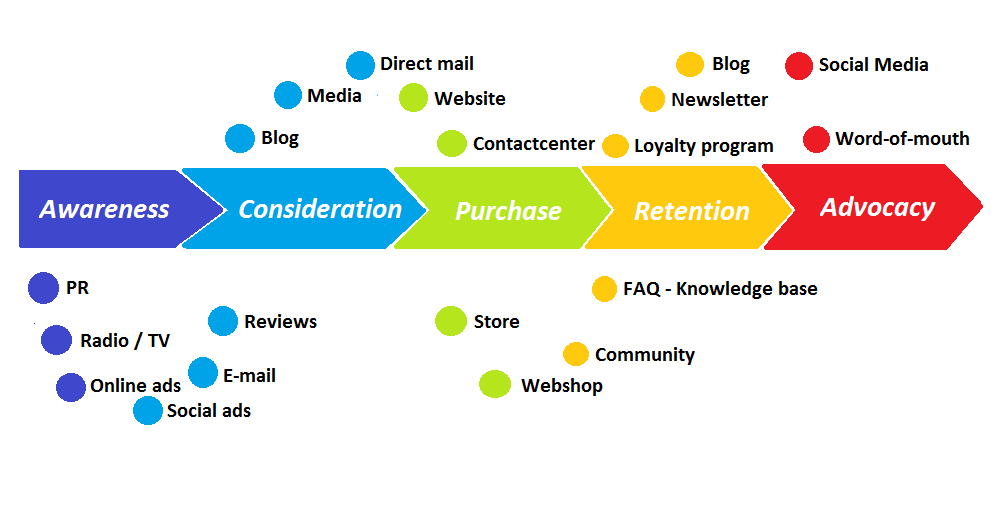
That makes the quality of the digital journey a commercial issue, not simply a marketing one. A click, basket or completed payment confirms that a customer acted at a particular moment. It does not establish that the business created durable value. The more meaningful test is whether the expectation formed during acquisition survives the subsequent moments that determine retained value: seeing the final price, recognising a paid endorsement, receiving the product or service, and seeking help when something goes wrong.
This matters particularly in the UK now. The Competition and Markets Authority’s 2026–27 plan identifies misleading online practices as a priority. Its work on price transparency, its action involving StubHub UK and hidden fees, and its investigations into potentially fake or misleading reviews show that digital information practices are active market concerns (Competition and Markets Authority, 2026) ↗ ↗ ↗ ↗.
Sanctuary’s central proposition is **informed conversion**. A customer should be able to understand the material price and conditions, identify when an endorsement is commercial, and make a reasonable assessment of social proof before committing meaningful time, data or money. This is not an argument against persuasive selling. It is an argument against treating a completed sale as sufficient evidence that persuasion has worked.
The alternative can be false efficiency. A compulsory charge revealed late may lower cancellations only by shifting dissatisfaction into checkout abandonment, refunds or complaints. An unclear creator-led offer can produce qualification questions that land with customer-service staff. Review signals that generate confidence beyond what delivery can support may intensify disappointment. For an SME, the same small team often owns marketing, fulfilment and customer care. Preventable recovery work therefore constrains management capacity, productivity and the value retained from demand generation.
Customers encounter one promise, not separate compliance categories
Customers cannot fully inspect many products and services before purchase, so they use proxies. A displayed price signals affordability and comparability. Reviews suggest the experience of other customers. A creator recommendation can imply relevance, popularity or quality. In practice, customers do not encounter these as distinct regulatory categories. They reinforce, qualify or contradict each other as a person decides whether an offer is worth pursuing.
Price sequence matters because it sets the basis of comparison. CMA guidance states that, where a trader makes an invitation to purchase, the total price should be provided upfront; unavoidable charges introduced later can raise drip-pricing concerns (Competition and Markets Authority, 2026) ↗. The StubHub UK action illustrates why sequence has commercial significance: a mandatory fee added later altered the price against which customers had initially compared the offer (Competition and Markets Authority, 2026) ↗. A charge can be legitimate in itself while still materially changing a decision if it appears after a customer has invested attention and effort on the basis of a lower figure.
Research on reviews identifies a related vulnerability. Department for Business and Trade research examined 2.1 million reviews across nine popular UK ecommerce platforms and tested responses with 4,900 UK online shoppers. Across three categories, it estimated that 11% to 15% of reviews could be fake. In experimental work, subtle, well-written fake reviews increased purchase likelihood by 3.1%, rising to 9.2% for products above £80. A generic moderation statement did not produce a statistically significant correction in purchase behaviour (Department for Business and Trade, 2023) ↗. This is not evidence that all review systems are unreliable. It does show that apparently credible social proof can influence decisions even where consumers have limited means to judge its provenance.
Influencer disclosure affects another part of the same judgement: whether a viewer understands the basis of a recommendation. The Advertising Standards Authority found that clear “Ad” labels and prominent platform labels were more readily understood than terms such as “#gifted” or “#thanks”. Around half of respondents were confident they could identify influencer advertising in the tested feeds, while more than a quarter could not identify advertising in the tested posts (Advertising Standards Authority, 2026) ↗. In the ASA’s travel-influencer snapshot, only 20% of 531 posts served to UK users were adequately disclosed; 11% were inadequately disclosed and 69% made no disclosure attempt (Advertising Standards Authority, 2026) ↗.
The evidence does not directly observe every component in a single customer journey, and it should not be presented as doing so. The interpretation is nevertheless commercially plausible: a low headline price can win attention; review signals can lower perceived risk; and an apparently independent recommendation can increase salience or trust. Together, those signals may lead a customer to infer that the price is final, other customers endorse the offer and the recommendation is independent. Later information can then change the meaning of the proposition that first secured the customer’s attention.
Transparency involves trade-offs; retained value is the proper measure
More transparency will not automatically improve immediate conversion. An all-in price may appear less competitive than an incomplete headline figure. Prominent advertising disclosure may make creator content feel less spontaneous. More robust review governance may reduce the volume of published reviews, reveal operational weaknesses or require capabilities a growing business has yet to develop.
Businesses should therefore avoid asserting a generic “trust dividend” from a disclosure change or redesigned price page. A systematic review of dark-pattern research identifies conceptual and empirical gaps, including substantial reliance on self-reported outcomes (Bento et al., 2026) ↗. The ASA travel study is a snapshot, not an estimate of disclosure across all influencer marketing. The review research covers particular platforms and categories, while its experiment measures stated purchase likelihood rather than realised lifetime value. Aggregate retail data cannot establish the effect of an individual firm’s design choice.
These limitations do not support inaction. They change the management question. The choice is rarely between opaque persuasion and no persuasion; it is between different presentations of a legitimate offer. The relevant test is whether the presentation continues to create value after the customer encounters the full commercial reality. A decline in click-through or checkout conversion can be commercially justified if it is accompanied by fewer cancellations, lower refund rates, fewer contacts, reduced complaint volumes or stronger repeat purchase.
There is a legitimate counterargument: not all complexity can be eliminated. Delivery restrictions, configuration choices, eligibility rules, stock availability and variable service requirements cannot always be compressed into one price or one line of copy. The standard should therefore be proportionate rather than simplistic. A material qualification should be visible while it can still alter a reasonable customer’s decision, rather than after the business has secured their attention, data or effort.
For Sanctuary, the practical implication is to test clear and compliant alternatives, then assess downstream results alongside conversion. A simple before-and-after comparison is weak evidence because seasonality, product mix, stock, targeting and service capacity may also have changed. Comparable cohorts or controlled tests, where feasible, provide a more credible basis for judgement. For paid creator work, the testing question concerns the clarity and placement of disclosure—not whether disclosure is optional.
Measure the expectation gap across acquisition, payment and delivery
Sanctuary uses **expectation gap** to describe the difference between the expectation created at acquisition and the experience at payment, fulfilment and early use. It is not a single metric, and complaint counts alone are inadequate because many dissatisfied customers never complain. It is better detected through recurring patterns: fee-related checkout abandonment, “not as expected” refunds, repeat questions about conditions, complaints after creator activity and weaker post-purchase outcomes from particular acquisition sources.
A conventional dashboard of impressions, clicks, baskets and same-day revenue cannot reveal this reliably. It records whether a journey creates demand, not whether that demand survives final price disclosure, operational delivery and early experience. This distinction matters especially for SMEs and local businesses. A preventable refund or service contact consumes scarce staff time; repeated across a campaign, it displaces training, service improvement and business development. Reducing avoidable recovery work can help businesses retain more of the economic value generated through acquisition.
**Sanctuary recommendation:** connect the information used to acquire customers with cancellations, refund reasons, complaint themes, service contacts, repeat purchase and review sentiment for each material journey. Segment by source where practical. Paid advertising, creator partnerships, affiliates and marketplace listings can produce similar headline conversion but very different downstream costs and customer outcomes. Results should also be read against stock, staffing and delivery capacity. A campaign that persistently exceeds fulfilment capability is not necessarily a commercial success.
This does not require sophisticated attribution infrastructure at the outset. A monthly cohort comparison may be enough: compare post-purchase outcomes for customers acquired through priority campaigns or price paths, then maintain a shared register of recurring failures. The purpose is diagnostic, not punitive. It helps distinguish a campaign that merely acquires customers from one that acquires customers whose expectations the business can meet and whose value it can retain.
Build journey-level controls before scaling demand
The accountable unit should be the material customer journey, from the first commercial claim through payment, fulfilment and early post-purchase service. Page-by-page approval is inadequate where the meaning of a price or recommendation changes between an advert, marketplace listing, creator post and checkout. A named commercial owner should be able to resolve trade-offs across marketing, ecommerce, operations, customer service and external partners.
A proportionate control system has four elements.
**First, maintain a material-claim register.** For high-spend campaigns, high-traffic pages and high-refund offers, record claims about price, savings, availability, delivery, comparisons, reviews and endorsements. Assign an owner, retain substantiation and set a review date. This provides a practical way to identify stale promotions, unsupported comparisons and obsolete affiliate content.
**Second, test the real price path.** Follow priority journeys from the advert, creator post or listing to payment on mobile as well as desktop. Record the first displayed price, unavoidable charges, compulsory add-ons, exclusions, renewal conditions and delivery constraints. CMA guidance matters because an invitation to purchase may arise before the final checkout screen (Competition and Markets Authority, 2026) ↗. The operational question is straightforward: does the proposition that won the click remain recognisably consistent at payment?
**Third, establish provenance for trust signals.** For reviews, document collection methods, incentives, eligibility checks, moderation and the treatment of negative feedback. For creators and affiliates, retain briefs, disclosure expectations or platform settings, and records of priority content. Documentation does not itself prove sound conduct, but it makes claims and commercial relationships reviewable while the CMA focuses on misleading reviews and online practices (Competition and Markets Authority, 2026) ↗ ↗. For paid creator activity, clear “Ad” labels and prominent platform labels are a strong practical default because audiences understood them more readily than ambiguous alternatives in ASA testing (Advertising Standards Authority, 2026) ↗.
**Fourth, create a rapid exception route.** Frontline teams need a usable means to flag live claims that stock, delivery or service teams cannot fulfil. Pre-approved price language, disclosure formats and escalation routes are more valuable to a growing business than a lengthy policy that cannot operate at campaign speed.
A focused 90-day programme can establish this discipline. In the first 30 days, map the ten journeys responsible for the greatest revenue, paid traffic, refunds or complaints. In days 31–60, correct evident breaks: bring unavoidable charges forward where practicable, remove ambiguous review incentives and make creator-disclosure expectations explicit. In days 61–90, test clear alternative presentations and review downstream outcomes alongside conversion.
The objective is not a more sophisticated nudge. It is a more dependable connection between the demand a business creates and the value it retains. For UK firms operating with constrained capacity, that is a practical route to stronger trust, better management capability and less avoidable recovery work.
Research foundation
References
- Office for National Statistics (2026). Retail sales, Great Britain. Office for National Statistics.Source ↗
- Competition and Markets Authority (2026). Annual Plan 2026 to 2027. GOV.UK.Source ↗
- Competition and Markets Authority (2026). Providing clear and accurate information about prices: summary. GOV.UK.Source ↗
- Competition and Markets Authority (2026). CMA orders StubHub UK to refund customers over hidden fees. GOV.UK.Source ↗
- Competition and Markets Authority (2026). Fake and misleading reviews: 5 businesses under CMA investigation. GOV.UK.Source ↗
- Alma Economics (2023). Fake online reviews research: Estimating the prevalence and impact of fake online reviews. Department for Business and Trade.Source ↗
- Advertising Standards Authority (2026). Consumer Awareness and Understanding of Influencer Marketing: Summary Report. Advertising Standards Authority.Source ↗
- Advertising Standards Authority and Committee of Advertising Practice (2026). Snapshot Report: Travel influencer disclosure. Advertising Standards Authority.Source ↗
- Laura Sofía Bento-Silva; Silvia Cachero-Martínez; Nuria García-Rodríguez (2026). How Dark Patterns Shape Consumer Behavior on Social Media: A Systematic Literature Review and Research Agenda. International Journal of Consumer Studies, 50(5), e70240.Source ↗DOI: 10.1111/ijcs.70240
- Nick Nijhuis. Hero image: Customer journey with touchpoints English.png. Wikimedia Commons · CC BY-SA 4.0.Image source ↗
Related Sanctuary capabilities
From analysis to implementation.
Discussion
No approved comments yet.