
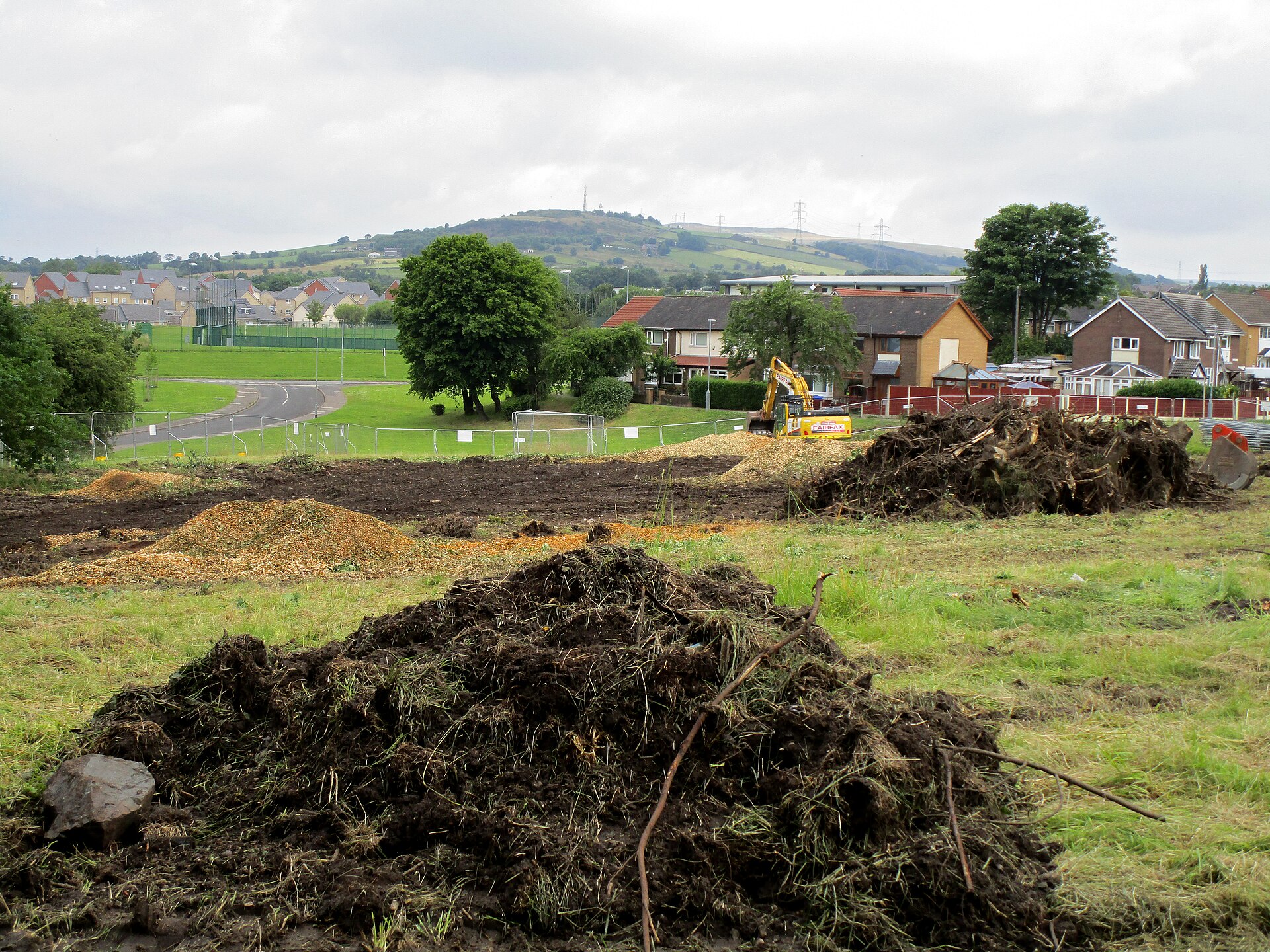
Key findings
- The Strategic Sites Accelerator (SSA) is a selective UK-wide pilot, with plans to invest in six to ten sites during this Parliament while supporting some earlier-stage schemes towards investment readiness. More than £700 million of finance and technical assistance is associated with the programme. (Department for Business and Trade, 2026) [[dbtssa2
- The pilot timetable rewards preparedness: applications close on 19 January 2027 and government expects first investments by the end of March 2027. The immediate advantage will lie with sponsors able to present decision-grade evidence, not simply an attractive regeneration narrative. (Department for Business and Trade, 2026; HM Treasury, 2026) [[dbt
- SSA selection criteria put additionality, credible occupier or investor demand, delivery capability and a route for the market to finance the bulk of delivery at the centre of the proposition. This makes it an exercise in risk conversion rather than a general funding competition. (Department for Business and Trade, 2026) [[dbtssa2026]]
- Grid, planning and commercial viability should be managed as linked dependencies. Connections data and improving planning-system performance can inform a delivery case, but neither substitutes for a site-specific plan for capacity, consenting, land control, funding and demand. (NESO, 2026; Planning Inspectorate, 2026) [[nesoconnections2026]] [[pins
The real proposition is risk conversion, not site promotion
The UK Strategic Sites Accelerator arrives at a point when the case for bringing forward employment land is strong, but private capital is likely to remain exacting. The Office for Budget Responsibility’s October 2026 forecast expects real GDP growth of 1.0% in 2027 and unemployment to rise to just above 5% in the second quarter of the year. That does not determine the prospects of an individual site, but it reinforces a basic investment reality: uncertain demand, unresolved infrastructure costs and weak governance will be priced into decisions or deter them altogether. (Office for Budget Responsibility, 2026) ↗
The SSA is designed for this problem. It is a UK-wide pilot for high-potential but stalled industrial and commercial sites, combining finance and technical assistance. It plans to invest in six to ten sites during this Parliament and to help selected earlier-stage projects become investment-ready. The programme’s stated tests include strategic-sector alignment, credible occupier, investor or end-user demand, evidence of market failure, value for money, an experienced delivery team and a secured route for the market to provide the bulk of project funding. (Department for Business and Trade, 2026) ↗
That combination matters. More than £700 million is a significant headline, but it should not be read as a general regeneration fund or as a substitute for a viable commercial proposition. The programme is asking a more demanding question: can a bounded public intervention remove a specific blocker, enabling private capital and delivery capability to take the project forward?
**Sanctuary interpretation.** The most competitive proposition may therefore be neither the largest site nor the one with the broadest catalogue of anticipated benefits. It may be the scheme that can show, with greatest discipline, how an identifiable intervention changes the investment decision. A remediation package, land-assembly solution, enabling transport work or utilities intervention is compelling only if it is linked to a credible occupier pathway, a viable capital stack and an accountable delivery route.
This framing should also temper expectations. SSA selection would be a meaningful milestone, but it is not equivalent to construction, occupation or long-term local economic impact. The programme should be judged first on whether it resolves material barriers and mobilises follow-on investment, then on whether those changes translate into productive jobs, viable businesses and durable local value.
A short application window creates a readiness premium
The first pilot application window closes at 11.59pm on 19 January 2027. The initial stage covers site and stakeholder information, planning status and high-level financial requirements; the next stage requires more detailed financial information, delivery barriers and strategic and economic impact. Government expects the programme to make its first investments by the end of March 2027. (Department for Business and Trade, 2026; HM Treasury, 2026) ↗ ↗
This sequence creates a two-speed market. Some sponsors will be ready to make an investment case: they know the land position, the delivery constraint, the likely cost, the market counterparties and the decision needed from the state. Others will have strategically important sites but lack the evidence to support a financing request. The latter group should not mistake that position for failure. The SSA explicitly contemplates support that can address land assembly, planning, utilities, transport and procuring suitable partners. (Department for Business and Trade, 2026) ↗
The strategic mistake would be to submit a large funding ask before establishing the underlying diagnosis. A project can be stalled for several reasons, but its proposition needs to distinguish the binding constraint from the wider list of risks. If fragmented ownership is the true obstacle, an unsupported request for construction finance is unlikely to solve it. If power capacity is the material uncertainty, a generic assertion that the location is well connected does not create an investable infrastructure plan.
A credible application should answer five linked questions:
1. **What is stopping delivery now?** Identify the one or two constraints whose resolution changes the project’s viability or timing.
2. **Why is public intervention additional?** Show whether the scheme would otherwise not proceed, be delayed materially or deliver less public value. Convenience is not additionality.
3. **What funds the balance of delivery?** Since the market is expected to provide the bulk of funding, identify prospective sources of capital, their conditions and the residual gap.
4. **Who will use the site?** Set out evidenced occupier dialogue, anchor demand, a credible end-user pipeline or another defensible route to revenue.
5. **Who is accountable for delivery?** Demonstrate that the sponsor and delivery partners can manage the commercial, technical and public-sector interfaces.
The first two questions are particularly important because they expose a central trade-off. The larger the claimed public intervention, the stronger the evidence needed that it unlocks a proportionate private and public return. A narrowly targeted intervention may be easier to justify and govern than a request that effectively transfers an entire scheme’s commercial risk to the public sector.
The mechanism: commercial, infrastructure and planning risks are interdependent
The SSA’s criteria imply that stalled sites should be treated as connected systems rather than separate workstreams. Commercial viability, infrastructure sequencing and the planning pathway can each undermine the others.
**Commercial risk comes first, but cannot stand alone.** The programme requires credible occupier, investor or end-user demand and, where National Wealth Fund capital is used, expects a positive financial return. (Department for Business and Trade, 2026) ↗ This is a safeguard against public capital becoming an open-ended grant substitute. It also means that projected jobs, supply-chain activity and local growth claims need a plausible route through rents, land values, operating income, service contracts or another recoverable source of value.
There is a counterargument: early public commitment can itself create confidence and attract investors who would otherwise wait. That is often true for strategic infrastructure and difficult sites. Yet confidence effects are most credible when the intervention reduces a known risk, rather than merely signalling political support for an unresolved scheme. The relevant question is not whether public money can catalyse investment; it is whether the proposed intervention changes the economics sufficiently for private parties to commit.
**Infrastructure evidence must distinguish information from certainty.** NESO’s Connections 360 tool makes connection-site information more visible, but the published information includes contracted projects and locational data subject to acquisition and internal checking. It is therefore a valuable early-screening tool, not proof that a development has deliverable power on a given date or at a known cost. (NESO, 2026) ↗ Sponsors should separate existing capacity, contracted capacity, an indicative connection pathway, required reinforcement, and the allocation of timing and cost risk. This distinction is especially material for energy-intensive industry, advanced manufacturing and data-led uses.
**A quicker planning system does not remove site-specific dependencies.** The Planning Inspectorate reports that local-plan examination time fell from 31 to 19 months in 2025–26, while open appeals reduced by 18% during the year. (Planning Inspectorate, 2026) ↗ Those are useful system-level signals. They do not settle site-level questions around land interests, transport mitigation, environmental obligations, statutory consultees or local political alignment. Nor can a planning consent compensate for absent end-user demand or an unclosed funding gap.
**Sanctuary recommendation.** Sponsors should use one integrated decision log, rather than independent planning, finance and stakeholder trackers. It should connect critical milestones to named owners, permissions, funding conditions, infrastructure dependencies, procurement packages and the evidence required for each investment decision. Its purpose is not additional reporting; it is to show whether progress in one area genuinely enables the next commercial commitment.
What success could look like by March 2028 — and what could derail it
The programme’s design and timetable support three plausible scenarios, rather than a single forecast.
**Base case: selective conversion.** A small number of sites receive investment or tightly defined interventions, while others receive technical support or remain in a development pipeline. Selected projects resolve specific blockers, but construction and occupation occur on different timetables. This is the most credible near-term outcome because the programme is deliberately selective and the published milestone is first investment by March 2027, not project completion. (Department for Business and Trade, 2026; HM Treasury, 2026) ↗ ↗
**Upside case: demonstrator projects establish replicable models.** Some sites use public enabling investment to bring private finance forward quickly, producing credible templates for remediation, land assembly, grid coordination or cluster infrastructure. The catalyst would be mature anchor demand, a capital stack with identifiable decision conditions and sponsors able to make timely trade-offs. The SSA’s insistence that the market funds the bulk of delivery makes this outcome possible, though it cannot assure it. (Department for Business and Trade, 2026) ↗
**Downside case: polished narratives do not convert into transactions.** Proposals may align with strategic sectors while still lacking land control, bankable demand, deliverable infrastructure or an agreed allocation of risk. In this case, public support may fund more preparatory activity without reaching financial close. That would not make all technical assistance ineffective, but it would weaken the claim that the programme is accelerating delivery.
The leading indicators are practical rather than promotional: verified land control; a quantified viability gap that can be challenged; documented investor or occupier engagement; a utilities plan with explicit assumptions; a planning critical path; and a governance vehicle with authority to make decisions. They offer a better test of momentum than announcements alone.
The local economic opportunity depends on how places organise delivery
For local authorities, mayoral bodies and site sponsors, the immediate task is to build an investable local proposition. That means a compact conversion board with authority across commercial, planning, infrastructure and local-benefit decisions; an evidence room covering title, costs, funding, demand, utilities and planning risks; and a clear statement of the intervention requested from the SSA.
For SMEs, the most realistic near-term opportunity is unlikely to be a broad, immediate procurement pipeline. It is to help remove recognised delivery constraints. Relevant capabilities may include environmental and technical surveys, remediation, logistics, skills partnerships, local recruitment, data management, maintenance, engagement and supply-chain coordination. Smaller firms should position themselves against a defined site risk and delivery milestone, rather than a generic sector label.
This has a wider local-growth implication. Strategic employment sites can create value beyond the boundary of the development, but only if delivery plans connect investment to local firms, employability pathways and management capability. A commitment to local economic value is more credible where it is translated into procurement packages, skills requirements, supplier-development activity and measurable responsibilities for the delivery vehicle. These measures should be designed early, before contracts and operating models become fixed.
For investors and developers, the central test is whether the intervention de-risks a bankable milestone without creating permanent dependence on public support. A finite intervention, a commercial exit route and accountable governance are stronger than a proposal that defers fundamental viability decisions.
The SSA’s broader importance may therefore lie beyond the six to ten sites it intends to invest in. If it raises the quality of site preparation—forcing places to connect demand, capital, infrastructure and delivery responsibility—it could improve the pipeline of investable projects more widely. If it becomes a competition for ambitious narratives without those connections, the £700 million headline will do little to change delivery outcomes.
Research foundation
References
- Department for Business and Trade (2026). Strategic Sites Accelerator. Business.gov.uk.Source ↗
- HM Treasury (2026). Budget 2026. GOV.UK.Source ↗
- Office for Budget Responsibility (2026). Economic and fiscal outlook – October 2026. GOV.UK.Source ↗
- Planning Inspectorate (2026). Planning Inspectorate Annual Report and Accounts 2025/26. GOV.UK.Source ↗
- National Energy System Operator (2026). Connections 360. NESO.Source ↗
- Stephen Burton. Hero image: Hattersley Science and Technology Park - geograph.org.uk - 6893918.jpg. Wikimedia Commons · CC BY-SA 2.0.Image source ↗
Related Sanctuary capabilities
From analysis to implementation.
Discussion
No approved comments yet.