
Key findings
- October’s improvement in retail volumes is encouraging but insufficient evidence of a durable discretionary-spending recovery: food stockpiling and category-specific effects contributed to the result.
- The near-term backdrop is likely to remain uneven. The Bank of England’s central forecast combines slower consumption growth in 2027 with pressure on real post-tax labour income and elevated inflation.
- Digital demand matters increasingly, but a rising online sales share is not automatically profitable growth. Delivery, returns, service contacts and acquisition costs determine whether conversion creates contribution.
- Price transparency is both a regulatory baseline and a commercial lever. The price customers expect to pay, including unavoidable charges, shapes trust and checkout completion.
- For SMEs, high-street businesses and multi-channel retailers, the priority is a conversion-control system: explicit pricing, dependable availability, channel-level contribution reporting and pre-agreed action thresholds.
The thesis: resilience in retail is not the same as recovery
**Forecast horizon: November 2026 to April 2028.** The UK retail question is no longer simply whether consumers are still spending. They are. The more consequential question is whether retailers can convert selective demand into profitable completed purchases when households remain sensitive to the final price, the timing of payment and the risk of getting a purchase wrong.
October’s retail data support a measured, rather than celebratory, reading. Great Britain retail sales volumes rose by 0.7% in the month and were 1.7% higher than a year earlier; the smoother three-month measure rose 0.4%. Yet the Office for National Statistics (ONS) also identifies food stockpiling following government preparedness advice, alongside rebounds in clothing and other non-food categories. That combination suggests resilience, but it does not establish that discretionary purchasing power has recovered broadly or durably (Office for National Statistics, 2026) ↗.
The macroeconomic outlook strengthens the case for caution. The Bank of England expects household-consumption growth to slow from 1.2% in 2026 to 0.5% in 2027. Its central projection also includes a 0.6% fall in real post-tax labour income in 2027, with CPI inflation at 4.0% in 2027 Q4 after peaking at around 5% in mid-2027. These are conditional forecasts, not settled outcomes, and energy prices and inflation persistence are material uncertainties (Bank of England, 2026) ↗.
**Sanctuary’s interpretation:** this is a market in which demand remains contestable, but convenience claims and headline discounts will be less reliable sources of advantage. Retailers should compete to remove uncertainty: make the payable price clear, show that stock is genuinely available, explain fulfilment choices plainly and use promotions where they create incremental demand rather than subsidise purchases that were already likely to happen.
That matters especially for smaller firms. SMEs generally have less room to absorb poor fulfilment economics or indiscriminate discounting. A credible offer, well matched to a local customer mission, can therefore be more valuable than trying to match the promotional intensity of larger competitors.
What the evidence says—and what it cannot say
Three signals should shape commercial planning, but none should be treated as a standalone forecast.
**First, aggregate retail volumes are positive but volatile.** The October increase followed a revised 0.6% fall in September. The three-month rise is consequently more useful than the monthly headline: it points to continuing demand, not a clear restoration of household pricing power. Retail sales volumes are an important measure of goods purchasing, but they cannot by themselves settle whether households feel more financially secure or whether a retailer’s sales mix is becoming more profitable (Office for National Statistics, 2026) ↗.
**Second, channel mix is changing faster than the aggregate market.** Online spending values rose by 1.6% in the three months to October and by 8.9% year on year; online accounted for 29.2% of retail spending in October, marginally above September’s 29.1%. These are value measures, so they include price effects and should not be read as equivalent volume growth. Nonetheless, they make the digital purchase journey strategically important: an increasing share of demand is exposed to checkout design, delivery promises, returns processes and paid-acquisition economics (Office for National Statistics, 2026) ↗.
**Third, physical demand is place-specific.** Experimental ONS footfall indicators show UK retail footfall up 6% month on month in October but still 1% below October 2025. Town and city centres were the only site type showing year-on-year growth, at 1%, while retail parks and district or local centres were down 7% and 2% respectively. The data are non-seasonally adjusted and require caution, particularly in month-on-month comparisons. Their value is diagnostic: a national estate narrative can obscure sharply different local customer missions and catchment conditions (Office for National Statistics, 2026) ↗.
Consumer-price data explain why this distinction matters. October CPI inflation was 3.6%, with transport inflation at 7.5% and goods inflation at 3.5%. Higher essential and transport costs need not stop a purchase, but they can increase scrutiny of delivery charges, postpone low-urgency baskets and make a poorly explained price feel less acceptable (Office for National Statistics, 2026) ↗.
The counterargument is that a resilient labour market, easing energy pressure or a stronger-than-expected real-income outcome could release discretionary demand sooner. That possibility should remain in plans. It does not justify treating one month of retail growth as proof that the squeeze on household decision-making has passed.
Why total-price clarity is now part of retail economics
In a selective-demand environment, the relevant commercial system is larger than the advertised price. It includes mandatory charges, delivery speed and cost, stock confidence, payment friction, returns terms and the ease of resolving a problem. A campaign may create efficient-looking traffic while still destroying value if customers encounter an unexpected charge at checkout, abandon the basket, or return an item at a cost the original sale did not capture.
The Competition and Markets Authority’s price-transparency work addresses the treatment of mandatory fees, taxes and charges, including drip pricing and partitioned pricing. Compliance with that framework is essential; commercially, it also provides a useful design principle: compete on the price the customer can realistically expect to pay, not merely the price that produces the most attractive first impression (Competition and Markets Authority, 2026) ↗.
This does not mean every retailer should offer universal free delivery. Absorbing fulfilment costs indiscriminately can weaken contribution margin, particularly for low-value baskets or high-return categories. Nor is a delivery charge necessarily harmful when it is clear, proportionate and attached to a service customers value. The management task is to make the trade-off explicit.
A practical approach is to identify which baskets and customer cohorts justify subsidised delivery, where click-and-collect improves unit economics, and where faster fulfilment commands a credible premium. The analysis should include the full cost to serve: discount, carrier charge, packaging, customer service, returns and any store labour required for collection. This moves the debate from a blunt choice between “free delivery” and “charge delivery” to a more useful question: which fulfilment promise earns loyalty and contribution in this category?
Channel roles, high streets and local economic value
The evidence does not support a simple stores-versus-digital choice. It supports clearer channel roles.
Digital channels are effective for discovery, range, comparison and repeat ordering, but they can expose retailers to expensive acquisition, fulfilment and returns. Stores cannot compete on unlimited assortment, yet they can reduce customer risk through advice, immediate possession, exchanges, repairs, collection and local discovery. These capabilities matter most when a customer is uncertain about fit, quality, timing or after-sales support.
For a high-street business, the implication is not that every shop must become an experience destination. It is that the store proposition should solve a defined local problem better than a generic digital journey. Stock visibility, reliable collection, opening hours, staff knowledge and a frictionless returns process are often more commercially important than a loosely defined experiential offer. If those operational basics fail, a physical location adds friction and cost. If they work, it can improve conversion across channels and create repeat local demand.
This distinction also matters for local partnerships and regeneration programmes. Filling vacant units may improve visual occupancy without strengthening the customer missions that sustain independent businesses. Footfall, tenant mix and business-support interventions should be assessed together with accessibility, local spending patterns and whether firms have the management capability to translate visits into repeat custom. The ONS footfall variation across site types is a reminder that place-based strategy should begin with local evidence, rather than assume one national retail model applies everywhere (Office for National Statistics, 2026) ↗.
For entrepreneurs, the discipline is equally relevant. A compelling product is not enough if the final price, delivery promise or returns route creates uncertainty. Early investment in basic operating systems—accurate inventory, consistent pricing, customer-service ownership and cohort-level margin reporting—can be a productivity investment as much as an administrative one.
Scenarios and decision thresholds to April 2028
The Bank’s central forecast provides a useful base case, but businesses should plan against ranges of outcomes rather than a single macroeconomic number.
**Base case: selective growth with persistent margin pressure.** Retail volumes remain uneven through early 2027. Customers continue to spend on essentials and differentiated purchases, while low-urgency discretionary demand stays promotion-aware. Online remains structurally important; store performance varies by mission and location. This is consistent with the Bank’s expectation of weak consumption growth and restrictive financial conditions in 2027 (Bank of England, 2026) ↗. The winners are likely to be businesses that improve availability, price clarity and repeat purchase without relying on broad margin-dilutive promotions.
**Upside case: pressure eases sooner.** A durable easing in energy costs and a shallower-than-expected hit to real incomes could improve discretionary conversion from spring 2027. Retailers with relevant product, credible value and available stock would benefit. The mechanism is not simply higher demand: less affordability anxiety can reduce abandonment and improve the productivity of marketing expenditure.
**Downside case: inflationary pressure persists.** If elevated energy costs feed more widely into prices and wages, inflation expectations remain high and financial conditions stay restrictive, nominal sales growth could coexist with weaker volumes and greater promotional dependence. The Bank identifies the risk of second-round effects from higher energy prices, while emphasising uncertainty over their eventual scale (Bank of England, 2026) ↗.
The operational value of scenarios is in the triggers attached to them. Management teams should agree in advance what would change buying commitments, promotional depth, staffing or cash protection. Useful indicators include three-month retail-volume trends, category-level sell-through, online conversion, fulfilment contribution, returns rates and local footfall. No individual metric is decisive; a consistent deterioration across several measures is more actionable than a noisy monthly headline.
Energy and fuel costs deserve particular attention. ONS real-time indicators showed wholesale gas and electricity prices sharply higher than a year earlier in October, although early-November movements suggested some levelling. A sustained reversal would improve both household and operating-cost conditions; renewed increases would strengthen the downside case (Office for National Statistics, 2026) ↗.
Sanctuary recommendations: manage conversion as a controllable system
The priority is not another generic acquisition initiative. It is a conversion-control system that links price architecture, stock, fulfilment, CRM and local delivery to contribution margin.
**For retailers and consumer businesses:**
- Audit the final payable price across search, social, marketplace, website, store and collection journeys. Test whether customers understand unavoidable charges, delivery timing and returns terms before checkout.
- Replace a single return-on-ad-spend measure with contribution reporting by channel, basket, fulfilment route and customer cohort. Include discounts, delivery, returns and customer-service costs.
- Require each promotion to meet a stated test: which stock issue, customer segment or incremental-demand hypothesis makes this margin sacrifice worthwhile?
- Define channel jobs clearly. Assess stores not only on four-wall sales, but also on whether they support collection, exchanges, advice and repeat custom; assess digital not only on last-click revenue, but on profitable completed orders.
- For local businesses, combine footfall observations with customer missions, accessibility and local competitor evidence before changing opening hours, location strategy or tenant mix.
**For boards, owner-managers and local partnerships:** run the three scenarios against cash, buying commitments, margin and staffing now. Agree the measures that trigger action, and give named managers authority to act when those thresholds are met. This is management capability in practical form: converting uncertain external conditions into a sequenced operating plan.
The core judgement is straightforward. The next phase of UK retail is unlikely to reward undifferentiated discounting as reliably as it rewards trusted execution. Businesses that make the offer easier to understand, easier to receive and easier to resolve will be better placed to preserve customer value and margin whether demand strengthens or weakens.
Research foundation
References
- Office for National Statistics (2026). Retail sales, Great Britain: October 2026. Office for National Statistics, statistical bulletin.Source ↗
- Office for National Statistics (2026). Economic activity and social change in the UK, real-time indicators: 19 November 2026. Office for National Statistics.Source ↗
- Office for National Statistics (2026). Consumer price inflation, UK: October 2026. Office for National Statistics.Source ↗
- Bank of England (2026). Monetary Policy Report: November 2026. Bank of England.Source ↗
- Competition and Markets Authority (2026). Price transparency. GOV.UK.Source ↗
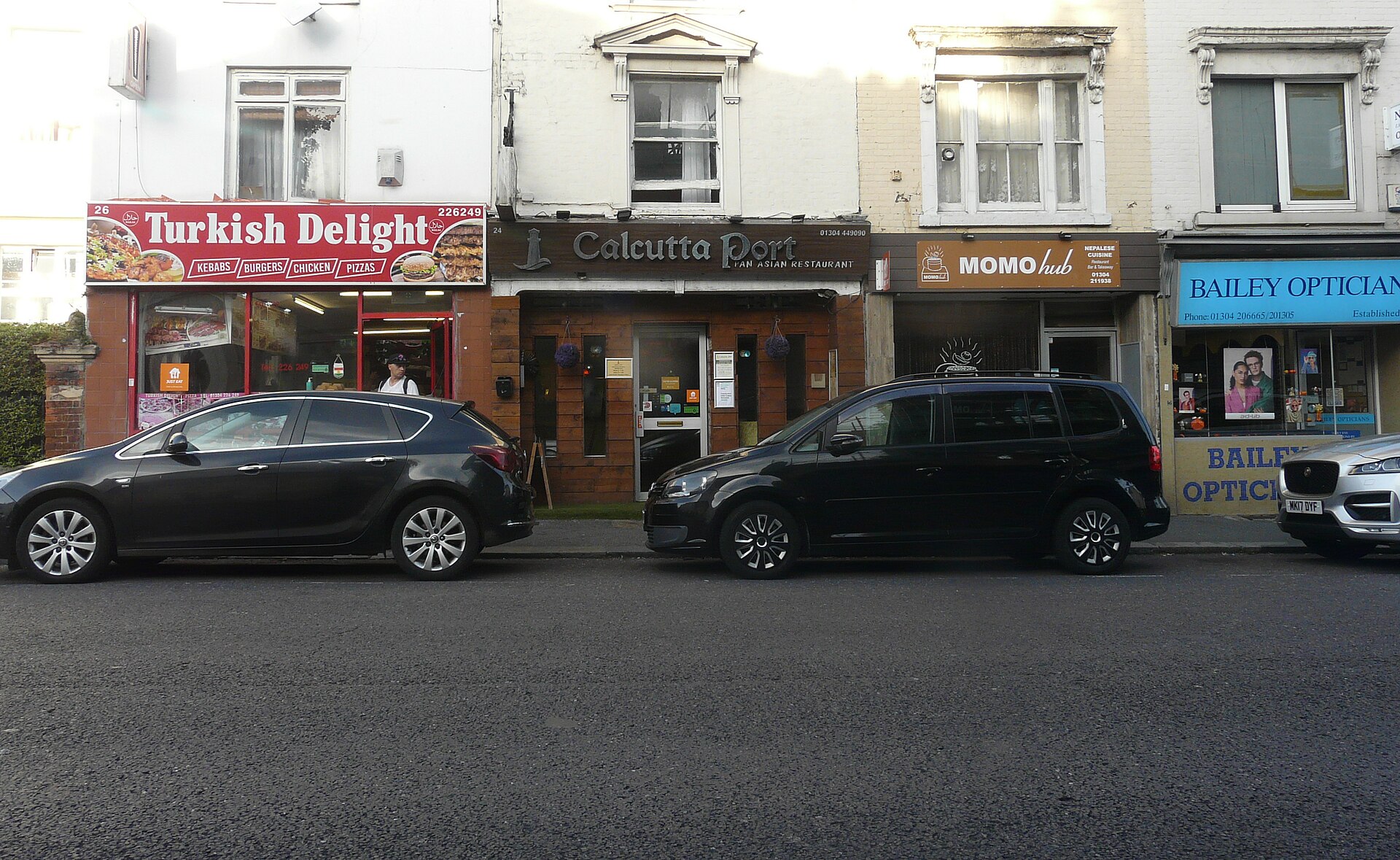
- John Baker. Hero image: Retail outlets, High Street - geograph.org.uk - 7644448.jpg. Wikimedia Commons · CC BY-SA 2.0.Image source ↗
Related Sanctuary capabilities
From analysis to implementation.
Discussion
No approved comments yet.