
Key findings
- Persimmon’s first-half recovery in delivery is substantive: completions rose 13% to 5,189 and underlying operating profit increased 10% to £189.1m. Yet housing operating margin fell from 13.1% to 12.8%, so greater output has not yet established stronger incremental economics. (Persimmon plc, 2026) [[persimmon2026h1]]
- Demand visibility is improving but requires careful interpretation. Private sales rates rose 7% including bulk transactions, but only 3% excluding them; the subsequent five-week update also showed a notably lower ex-bulk sales rate. Mortgage approvals fell and rates on newly drawn mortgages rose in August, keeping affordability central to the sales
- Standardised product, procurement scale and greater Space4 timber-frame use are credible productivity levers. Their value will be demonstrated only if they improve site margin, cash conversion and return on capital rather than simply enable a larger construction programme. (Persimmon plc, 2026) [[persimmon2026h1]]
- Planning reform can widen Persimmon’s land options, but a permission becomes local economic value only when infrastructure, finance, buildability and local demand allow it to become a funded, viable start. (GOV.UK, 2026) [[mhlg2026nppf]]
- Sanctuary’s central judgement is that Persimmon has restored capacity to grow, but has not yet proved that growth is self-funding and value-accretive. The critical indicators are private sales excluding bulk activity, cancellations and incentives, productive outlets net of closures, housing margin, cash conversion and returns on capital.
A real delivery recovery has yet to become a returns recovery
Persimmon’s interim results show a meaningful recovery in activity. First-half completions rose 13% to 5,189, underlying operating profit increased 10% to £189.1m and the private forward order book reached £1.31bn. The group was around 80% sold on its expected 2026 private completions. That gives the business materially better visibility over construction programmes than during the market’s weaker period, with consequences not only for shareholders but for the subcontractors, merchants, manufacturers and professional services firms attached to active sites. (Persimmon plc, 2026) ↗
The central issue for the UK market is therefore shifting. It is no longer simply whether Persimmon can complete more homes; it is whether it can do so at economics that justify the land, infrastructure and working capital required. This matters at a time when policy is seeking more supply but mortgage affordability still constrains the price and monthly repayment many households can support. A builder can lift output through better stock availability, changing product mix, buyer support, lower pricing or bulk sales. Those routes have very different implications for margin, cash and the durability of a recovery.
The first-half figures make that distinction unavoidable. Housing operating margin declined by 30 basis points, from 13.1% to 12.8%, despite the increase in completions and operating profit. That is not, by itself, evidence of a failing strategy: margins can lag volume during periods of new outlet opening, changing mix and operational investment. Nor does a 30-basis-point movement settle the medium-term trend. But it does show that volume growth should not be treated as proof of improving incremental returns. (Persimmon plc, 2026) ↗
Persimmon’s stated longer-term ambitions of a 20% housing operating margin and 20% return on capital employed are consequently more useful as tests of execution than as descriptions of the present position. To progress towards them, the company must deploy capital into sites that can sell at viable rates and avoid allowing land, infrastructure or work in progress to absorb more capital than the resulting margin can support. A successful recovery would create a steadier pipeline of work and reinvestment. A weaker one could still produce higher completion headlines while relying on concessions or progressively greater capital intensity. (Persimmon plc, 2026) ↗
Affordability means the quality of sales matters more than reservation headlines
Persimmon’s sales data support cautious confidence, not a conclusion that mortgage-funded demand has normalised. Private net sales per outlet per week increased 7% to 0.75 in the first half. Excluding bulk transactions, the improvement was 3%. Bulk sales can be commercially rational: they may improve absorption, help programme planning and add near-term visibility. But they are not a direct proxy for owner-occupier demand, and their price, margin and working-capital effects may differ from individual private sales. (Persimmon plc, 2026) ↗
The post-period update underlines the point. Across the five weeks reported, private sales rates were 0.72 per outlet per week including bulk activity and 0.59 excluding it, while the company noted softer enquiries in July. A short, seasonal period cannot establish a market trend. It does, however, caution against reading a forward order book as a complete measure of selling conditions. The relevant question is how many homes are sold, to whom, and on what commercial terms.
The wider mortgage backdrop explains why that distinction remains acute. Net mortgage approvals for house purchase fell from 55,900 in July to 54,900 in August 2026, while the effective rate on newly drawn mortgages increased from 4.45% to 4.60%. These national data do not describe Persimmon customers specifically, and one month’s movement should not be over-interpreted. The mechanism is nevertheless direct: higher mortgage rates reduce borrowing capacity, raise the deposit needed at a given house price and can extend decision times for marginal buyers. (Bank of England, 2026) ↗
Persimmon can plausibly gain share in this environment through available stock, local coverage and a product that buyers can finance. The counterargument is that share can also be bought through pricing, incentives or product mix. Public reporting does not isolate the full financial effect of incentives, limiting outside assessment of that trade-off. Sanctuary therefore places more weight on private sales excluding bulk activity alongside cancellations and incentive intensity than on reservations alone. Sales quality is improving only if demand holds without an offsetting erosion of site economics.
Standardisation is credible, but the capital cycle must validate it
Persimmon’s strategic response to the affordability-and-margin tension is primarily operational. It identifies procurement scale, standardised house types, specification control, overhead savings and vertically integrated manufacturing as cost-management levers. Space4 timber-frame usage rose 30% in the first half. Repeatable designs and factory-produced components can reduce waste, increase programme certainty and lessen dependence on scarce on-site labour, particularly where production planning is consistent across a larger outlet base. (Persimmon plc, 2026) ↗
That logic is credible but conditional. Standardisation does not remove the site-specific costs that often shape development viability: remediation, abnormal groundworks, planning conditions, infrastructure obligations and utility connections. Nor does manufacturing capacity automatically generate value if installation labour is constrained, build sequences slip or finished homes take longer to sell. Lower build costs can make a viable site more resilient when affordability is weak; they cannot rectify an unrealistic land cost or selling-price assumption.
The appropriate lens is the capital cycle. A better delivery model should support reliable completions first, protect or improve housing margin next, and then release cash and improve returns on capital. The adverse pattern would be sustained volume growth accompanied by weaker margins or increasing cash tied up in land and work in progress. That would indicate that activity is being maintained without better incremental economics.
Persimmon expected around 100 gross new outlet openings in 2026, secured detailed planning approvals for 6,123 plots in the first half and reported 80,836 owned and controlled plots, down 2% year on year. These are meaningful measures of future capacity, not evidence that the capacity will be productive. Closures, site maturity, local absorption, pre-revenue infrastructure spend and the timing of cash receipts determine whether a broader footprint improves returns or merely broadens exposure to a slower market. (Persimmon plc, 2026) ↗
For SMEs in the delivery chain, this distinction is practical rather than theoretical. A planning pipeline is not an order book, and gross outlet openings do not guarantee dependable workloads. Smaller contractors can invest in people, equipment and apprenticeships only when starts are funded, programmes are credible, procurement routes are clear and payment cycles are reliable. Persimmon’s execution therefore affects the investment confidence and management capacity of firms undertaking much of the physical delivery.
Planning reform widens options, but does not automatically create delivery or local value
The planning environment is strategically important to Persimmon, but it is not an automatic near-term earnings catalyst. The National Planning Policy Framework requires local plans to identify a sufficient supply and mix of sites, including specific deliverable sites for five years and developable sites or broad locations for later years. Better planning certainty can improve land replacement, reduce avoidable delay and support future outlet replenishment. (GOV.UK, 2026) ↗
Consent is only one point in the delivery chain. A site still needs viable pricing, adequate infrastructure and utility capacity, buildable conditions, labour and materials, and a pool of local buyers able to secure finance. In the current mortgage environment, more consented land may increase Persimmon’s future choice without immediately raising sales rates or margins. Its nearer-term strategic value is principally option value: a wider pool of potential sites that can become productive when commercial and delivery conditions align.
This distinction matters for local economic development. Housing targets do not automatically create dependable work for independent trades, merchants, training providers or high-street businesses. Local value emerges when allocated land becomes funded starts with stable schedules, transparent purchasing routes and dependable payment. Entrepreneurs in growth areas should therefore assess actual site programmes, expected starts and contractor structures rather than infer immediate demand from a planning allocation.
For local authorities, the task is sequencing, not allocation alone. Planning certainty supports viable sites; viable sites support productive outlets; productive outlets support completions; and sustained completions generate repeat work, skills demand and local expenditure. Infrastructure, utilities, skills constraints and weak local absorption can disrupt that sequence at each stage. National supply policy and builders’ commercial incentives align only when consented land can become homes that households can finance and builders can deliver at acceptable returns.
What would demonstrate a durable recovery?
The evidence supports a balanced judgement: Persimmon has improved output, forward visibility and operational capacity, but the recovery in returns remains incomplete. Mortgage affordability continues to constrain demand, while the first-half margin movement shows that higher completions have not yet produced clear operating leverage. (Persimmon plc, 2026; Bank of England, 2026) ↗ ↗
The constructive case is testable. Private sales excluding bulk activity should remain resilient or improve without a material rise in cancellations or incentives. Planning approvals should translate into productive outlets: sites that open, sell at viable absorption rates and contribute to completions after allowing for closures. Housing margin should then improve as volume grows, followed by stronger cash conversion and returns on capital. This sequence would show that standardisation, procurement and outlet expansion are producing more valuable delivery, not merely more delivery.
The weaker case does not require completions to fall sharply. Persimmon could sustain volume through buyer support, price concessions or greater use of bulk transactions while margin and cash conversion weaken. The risk would be greater if capital were committed to immature sites before local demand was established. In that outcome, headline delivery could appear resilient while the recovery consumes rather than compounds capital.
Taylor Wimpey offers relevant sector context, though not a direct read-across. Its revised distribution framework—an annual return of 4% of net assets and a further 2% through buybacks—illustrates the continuing importance of balancing distributions with profitability and cash generation after the downturn. Persimmon has a different land position, operating model and financial profile. The narrower lesson is that balance-sheet resilience can buy management time, but it cannot permanently substitute for profitable, cash-generative delivery. (Taylor Wimpey plc, 2026) ↗
Sanctuary’s recommendation is to follow a connected scorecard rather than a single reservations or completions measure: private sales excluding bulk activity; cancellations and incentives; productive outlets net of closures; build-cost progress; housing margin; cash conversion; and net cash or debt against management expectations. Company reporting remains the primary evidence for Persimmon’s own operations, while Bank of England data describe the wider mortgage market rather than its customer book. Those limits require caution, but they do not change the core conclusion: Persimmon has credibly restored its capacity to grow; it must now prove that the next phase of growth is self-funding and value-accretive.
Research foundation
References
- Persimmon plc (2026). Half Year Results for the Six Months ended 30 June 2026. Persimmon plc Investor Relations.Source ↗
- Persimmon plc (2026). Annual Report 2025. Persimmon plc.Source ↗
- Bank of England (2026). Money and Credit: August 2026. Bank of England.Source ↗
- Ministry of Housing, Communities and Local Government (2026). National Planning Policy Framework, Chapter 6: Delivering a sufficient supply of homes. GOV.UK.Source ↗
- Taylor Wimpey plc (2026). Half Year Results 2026. Regulatory News Service.Source ↗
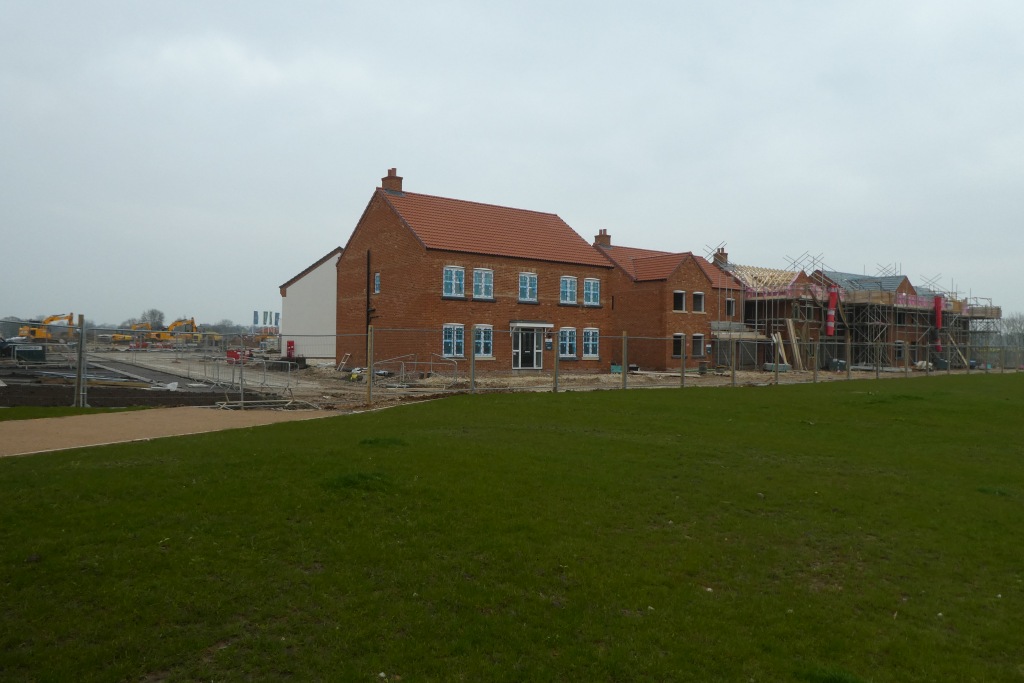
- DS Pugh. Hero image: Housing construction - geograph.org.uk - 7148470.jpg. Wikimedia Commons · CC BY-SA 2.0.Image source ↗
Related Sanctuary capabilities
From analysis to implementation.
Discussion
No approved comments yet.